
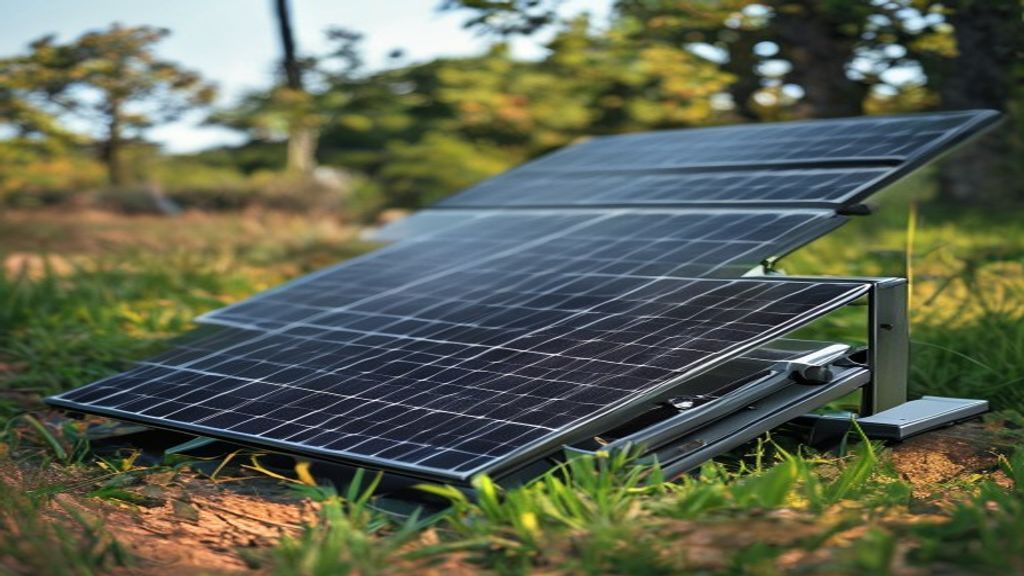
The best portable solar panel for most buyers is the Jackery SolarSaga 100W, based on the highest measured direct-sun output relative to its rating of any panel in this roundup and the manufacturer’s published specifications. Owners get roughly half the sticker wattage from any 100W panel here, so the gap matters more than the number printed on the box.
The Real-World Gap: Rated Watts vs Measured Watts
Portable solar panels lose output to heat, panel angle, cell efficiency, and atmospheric conditions that never match the lab conditions used to generate the rated wattage. OutdoorGearLab’s published test results put nearly every 100W portable solar panel somewhere between 30W and 51W of measured direct-sun output – a range that owners consistently confirm in real-world reports. That means a portable solar panel rated at 100W realistically delivers 30-51 measured watts, depending on the model. Buy on that number, not the one on the sticker.| Panel (100W rated) | The brand claims | The evidence shows |
|---|---|---|
| Jackery SolarSaga 100W | 100W rated | OutdoorGearLab measured 50.7W sustained direct sun (51% of rated) – best in the field |
| Renogy 100W Foldable | 100W rated | OutdoorGearLab measured 49.7W direct; highest single-hour yield at 60.0Wh |
| Luvknit 100W Foldable | 100W rated | OutdoorGearLab measured 48.3W direct (48% of rated) |
| Bluetti SP100L | 100W rated | OutdoorGearLab measured 48.0W direct (48% of rated) |
| Anker SOLIX PS100 | 100W rated | OutdoorGearLab measured 38.7W direct (39% of rated) |
| Goal Zero Nomad 100 | 100W rated | OutdoorGearLab measured 30.3W direct (30% of rated) – worst brand-name figure recorded |
Best Overall: Jackery SolarSaga 100W
Jackery‘s SolarSaga 100W posted the best measured-to-rated ratio of any panel in this database. OutdoorGearLab recorded 50.7W sustained in direct sun – 51% of its rating – plus 57.4Wh in one hour of direct sun and 17.4Wh indirect. OGL gave it an Editors’ Choice award with a score of 85/100, and tester Sam Schild called it “impressive in almost every regard.” Fold-out legs make it quick to deploy, and the panel is currently listed around $199 at the time of writing on sale (regular $299). The catch is the proprietary DC8020 connector – it needs an adapter to work with anything outside the Jackery Explorer line, and it can’t be daisy-chained. Jackery’s own FAQ also walks back the IP68 claim, warning against heavy rain or submersion despite the rating printed on the spec sheet.| Spec | Value |
|---|---|
| Rated output | 100W |
| Measured direct-sun output | 50.7W (OutdoorGearLab) |
| Weight | 7.9 lb (OGL measured) |
| Connector | Proprietary DC8020 (adapter included) |
| Weather rating | IP68 claimed, walked back by Jackery’s own FAQ |
| Price | Listed around $199 at the time of writing (reg $299) |
Best Value: Renogy 100W Foldable
Renogy‘s 100W Foldable panel is the pick for anyone tired of proprietary connectors. It uses standard MC4, meaning it works with almost any power station on the market and can be daisy-chained with other MC4 panels. OutdoorGearLab measured 49.7W direct and 60.0Wh in a single hour of direct sun – the highest energy yield of any panel OGL tested, portable solar panel or otherwise. It also posted the best cloudy-weather performance in the group at 20.0Wh indirect, earning a 9.5/10 sub-score and OGL’s “Best Solar Panel for Vans and RVs” award. The tradeoff is weight. At 21.2 lb it’s 2.7 times heavier than the Jackery SolarSaga 100, and its rigid, hinged frame makes it less packable for backpacking. The charging cable is also often sold separately – check before you buy.| Spec | Value |
|---|---|
| Rated output | 100W |
| Measured direct-sun output | 49.7W (OutdoorGearLab) |
| Best-in-test 1-hour yield | 60.0Wh direct (OGL) |
| Weight | 21.2 lb (OGL measured) |
| Connector | MC4, open standard |
| Price | Listed around $200 at the time of writing |
Best Budget Pick: Luvknit 100W Foldable
The Luvknit 100W is the surprise of the category. OutdoorGearLab measured 48.3W direct – 48% of rated – and 55.7Wh in one hour, earning OGL’s “Best Value” label with a score of 81. That’s a panel listed around $160 at the time of writing outperforming panels that cost more than double. OGL’s tester put it bluntly: “I’m amazed that this inexpensive panel is working better than panels that cost over twice as much.” It out-measures both the $399 EcoFlow 110W and the $400 Goal Zero Nomad 100 on raw direct-sun watts. The catch is documentation. Connector type, IP rating, and detailed owner sentiment are all unpublished. You’re buying strong measured performance without knowing exactly what plug you’re getting or how it handles weather.| Spec | Value |
|---|---|
| Rated output | 100W |
| Measured direct-sun output | 48.3W (OutdoorGearLab) |
| Connector | Not published |
| Weight | Not published |
| Price | Listed around $160 at the time of writing |
Best Adjustable-Angle Panel: Bluetti SP100L
Bluetti‘s SP100L earned its spot for kickstand design as much as output. OutdoorGearLab measured 48.0W direct (48% of rated) and 56.6Wh in one hour, plus 18.3Wh indirect. That’s a solid, mid-pack showing, but the legs are what OGL singled out – “very adjustable kickstand legs to get the ideal angle throughout the day.” That real-world sun-tracking flexibility matters more than a few extra measured watts if you’re leaving a panel set up all day at camp. It carries a cable storage pouch too, though OGL noted the hardwired cable itself sits outside that pouch rather than in it. At a listed price of $299 at the time of writing, it’s not the cheapest 100W panel here, and both IP rating and cycle/durability specs remain unpublished.| Spec | Value |
|---|---|
| Rated output | 100W |
| Measured direct-sun output | 48.0W (OutdoorGearLab) |
| Weight | 10.9 lb (OGL measured) |
| Connector | MC4, open standard |
| Price | Listed around $299 at the time of writing |
Best for High-Wattage Charging: EcoFlow NextGen 220W Bifacial
EcoFlow‘s NextGen 220W is the highest-spec foldable panel in this roundup on paper. It’s the first portable panel to use N-type TOPCon monocrystalline cells, adds bifacial rear-side gain, carries an IP68 rating on the whole panel, and ships with an integrated 30-60 degree adjustable bracket – a real improvement over the carry-case-as-stand design EcoFlow used on its 110W model. It’s listed around $279 at the time of writing on a long-running sale; the “$649 regular price” shown alongside it isn’t a real reference point given how consistently the discount runs. Here’s the honest caveat: no credible independent instrumented test of this panel exists yet. The category median for 100W panels sits around 48% of rated output, so budgeting for roughly 105 measured watts rather than the full 220W claim is the sensible approach until someone publishes real numbers. The bifacial rear gain is also conditional – it depends on ground reflectivity, and a grass or dirt campsite won’t come close to matching a white ground sheet.| Spec | Value |
|---|---|
| Rated output | 220W front / 175W rear |
| Measured output | No independent test published |
| Weight | 15.4 lb |
| Weather rating | IP68 (whole panel) |
| Warranty | 12 months (US) |
| Price | Listed around $279 at the time of writing |
Best for Anker Ecosystem Buyers: Anker SOLIX PS100
Anker SOLIX‘s PS100 is IP67-rated and built to pair directly with Anker SOLIX power stations via MC4/XT60 connectors. It’s listed around $299 at the time of writing. The measured numbers are the weak point. OutdoorGearLab recorded only 38.7W direct – 39% of rated, among the lowest in the field – plus 53.1Wh direct and just 12.2Wh indirect, a cloudy-weather sub-score of 5.5/10 near the bottom of the group. OGL’s stated cons were blunt: “Not the most efficient, expensive.” The kickstand is also less flexible than rivals – four fixed angle positions rather than continuously adjustable legs, which limits fine-tuning against the sun compared to the Bluetti SP100L’s kickstand approach.| Spec | Value |
|---|---|
| Rated output | 100W |
| Measured direct-sun output | 38.7W (OutdoorGearLab) |
| Weight | 10.6 lb (OGL measured) |
| Weather rating | IP67 |
| Price | Listed around $299 at the time of writing |
Panels We Can’t Recommend Without Better Data
A handful of panels in the database don’t make the cut here, either on measured performance or missing evidence. The EcoFlow 110W measured only 38.3W direct – 35% of rated, the worst rated-vs-real gap of any name-brand panel OutdoorGearLab tested, at a $399 list price. It also lacks a real kickstand; the zippered carry case doubles as the stand, which OGL said “works well for transportation” but is “less ideal” as actual support. The Goal Zero Nomad 100 is worse still – OutdoorGearLab measured just 30.3W direct, 30% of rated, the worst brand-name figure recorded in the field, at a $400 list price. For context, the $160 Luvknit measures 48W. Goal Zero’s proprietary 8mm/HPP connector locks you into their ecosystem exclusively. The Goal Zero Boulder 100 Briefcase fares a little better on direct sun at 40.3W measured, but collapses under cloud – just 5.6Wh in an hour of indirect light, the worst cloudy-weather figure of any 100W panel OGL tested, plus a 25.9 lb weight that OGL flagged as “bulky, seriously heavy.” Bluetti’s PV350 has no independent instrumented test at all. Owner reports on Bluetti’s own community forum range from roughly 60-80W per panel up to a brief spike over 200W, with another owner citing around 150W average in ideal conditions – uncontrolled anecdotes, not measurements. Its IP65 rating is also the weakest weather protection of any panel in this roundup; Bluetti’s own guidance says not to place it in rain at all. Anker’s SOLIX PS200 and PS400, and Goal Zero’s Nomad 200, all carry unverified pricing and no independent measured output. Anker’s own product FAQ for the PS200 is headed, verbatim, “Why can’t the solar panel reach its rated 200W power?” That’s the manufacturer admitting the gap before any tester does.Proprietary Connectors vs Open MC4: Why It Matters
Connector choice determines whether your portable solar panel survives an upgrade to a different power station brand. MC4 is the open industry standard – Renogy, Bluetti, BigBlue, and the EcoFlow NextGen 220W’s underlying panel connectors all use it, meaning any of those panels works with almost any MC4-equipped station. Jackery’s DC8020 and Goal Zero’s 8mm/HPP port are both proprietary. Jackery ships an adapter, so cross-brand use is possible with an extra part. Goal Zero’s lock-in is worse – its own documentation shows you may need a GZ-specific adapter cable even to move a panel between two of Goal Zero’s own products. Anker’s documentation is genuinely inconsistent. The PS200’s spec page, box contents, and FAQ describe three different connector configurations for the same port. It’s adapter-friendly in practice, but buyers deserve to know the paperwork doesn’t agree with itself. If you expect to switch power station brands within the next few years, an MC4-based portable solar panel protects that flexibility. If you’re committed to one ecosystem, a matched proprietary panel can simplify setup – just budget for the adapter if you ever change your mind. See our guide to choosing a portable power station for how connector compatibility factors into a full setup.How to Match a Panel’s MPPT Input to Your Power Station
A portable solar panel’s rated wattage only matters relative to what your power station’s MPPT controller can actually accept. Pairing a 100W panel with a station that has a 200W solar input ceiling wastes half the charging headroom you paid for. Given that measured output for most 100W panels lands between roughly 38W and 51W in direct sun, running two panels in parallel via MC4 daisy-chaining is often the more realistic path to meaningful charging speed than chasing a single higher-rated panel with no independent verification behind it. Check your station’s rated max solar input in watts, then work backward using measured – not rated – panel output to estimate real charge time. For a deeper look at pairing panels with specific stations, see our portable power station roundup and our Jackery Explorer 1000 v2 review.Portable Solar Panel Comparison Table
| Model | Rated | Measured direct-sun | Connector | Price |
|---|---|---|---|---|
| Jackery SolarSaga 100W | 100W | 50.7W (OGL) | Proprietary DC8020 | ~$199 |
| Renogy 100W Foldable | 100W | 49.7W (OGL) | MC4 | ~$200 |
| Luvknit 100W Foldable | 100W | 48.3W (OGL) | Not published | ~$160 |
| Bluetti SP100L | 100W | 48.0W (OGL) | MC4 | ~$299 |
| Anker SOLIX PS100 | 100W | 38.7W (OGL) | MC4/XT60 | ~$299 |
| EcoFlow NextGen 220W Bifacial | 220W | Not published | PV/MC4-type | ~$279 |
FAQ
Do portable solar panels really produce their rated wattage?
No. OutdoorGearLab’s published measurements show real-world direct-sun output for 100W-rated panels ranging from roughly 30% to 51% of the sticker figure. Treat rated wattage as a ceiling, not a promise.
What is the difference between monocrystalline and bifacial portable solar panels?
Monocrystalline cells face the sun directly and are the standard in nearly every panel in this roundup. Bifacial panels, like the EcoFlow NextGen 220W, add cells on the rear face to capture reflected light – but that gain depends entirely on ground reflectivity, and a typical campsite of grass or dirt won’t deliver anywhere near the boost a white reflective surface would.
Can I use any portable solar panel with any power station?
Only if the connectors match or you add an adapter. MC4 is the open standard and works broadly. Jackery’s DC8020 and Goal Zero’s proprietary port need adapters, and Goal Zero’s own documentation shows lock-in even between its own products.
How long does it take to charge a power station with a 100W solar panel?
It depends on measured output, not rated output. OutdoorGearLab recorded one-hour direct-sun yields between roughly 30Wh and 60Wh across the 100W panels it tested, so charge time varies significantly by model even though they all carry the same 100W rating.
Is MC4 or proprietary connector better for a portable solar panel?
MC4 is the safer long-term choice because it’s an open standard supported by Renogy, Bluetti, BigBlue, and most other brands. Proprietary connectors like Jackery’s DC8020 or Goal Zero’s HPP work fine within their own ecosystem but limit flexibility if you switch power station brands later.
What size portable solar panel do I need for camping?
A single 100W panel with strong measured output, such as the Jackery SolarSaga 100W or Renogy 100W Foldable, is generally sufficient for topping off a small-to-mid power station over a day. Owners needing faster charging often daisy-chain two MC4 panels rather than buying one high-rated panel with no independent verification behind its number.
Are bifacial portable solar panels worth the extra cost?
Possibly, but the rear-side gain is conditional on ground albedo and no independent instrumented test of the EcoFlow NextGen 220W Bifacial has been published yet. Until that data exists, budget for its front-face performance alone and treat the bifacial boost as a bonus, not a guarantee.
Related: Best Solar Panels for Camping 2026 — measured vs rated watts for camp and off-grid setups.