
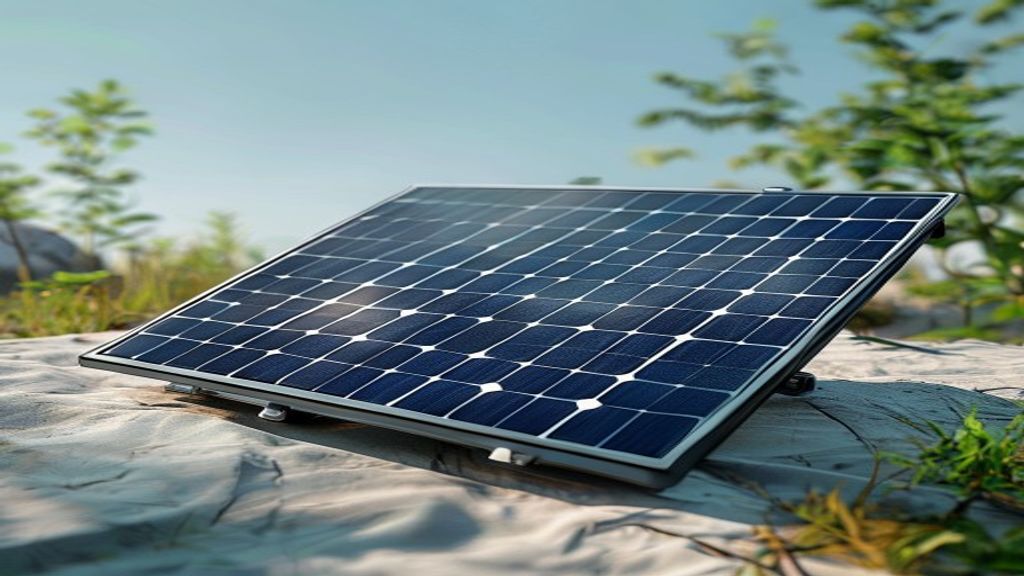
Every portable solar panel in this category ships with a rated wattage it will not deliver in the field, and the size of that gap — not the price tag — is the number that should drive your purchase. Based on aggregated owner reviews, manufacturer specification sheets, and OutdoorGearLab’s published bench figures.
Buy a portable solar panel today and you’re buying two numbers: the one printed on the box, and the one it actually produces in direct sun. They are rarely the same number. Across every panel with a published independent measurement, real-world output lands somewhere between 30% and 51% of the rated figure — not a defect, just physics and marketing meeting in the middle.
This guide walks through what’s actually been measured, what’s still an unverified claim, and which panels are worth your money once you strip the sticker wattage away. We’ll name specific models, specific numbers, and specific shortfalls — because a portable solar panel that quietly underperforms by half is still a portable solar panel worth buying, if you know what you’re really getting.
The Real-World Gap: Rated Watts vs Measured Watts
Portable solar panels deliver roughly half their rated watts in real conditions — the documented range across independently measured panels runs from about 30% to 51% of the nameplate figure. That’s not a rounding error. It’s the single most important fact in this category, and almost nobody selling you a panel will lead with it.
Take the numbers as OutdoorGearLab (OGL) recorded them. The Jackery SolarSaga 100W measured 50.7 W direct sun against its 100 W rating — 51%, the best ratio OGL has recorded. The Renogy 100W Foldable measured 49.7 W, also close to half. At the other end, the Goal Zero Nomad 100 measured just 30.3 W direct — 30% of its 100 W rating, the worst-performing brand-name panel OGL has tested.
The pattern holds at higher price points too. EcoFlow’s 110W panel, listed at $399, measured 38.3 W direct — 35% of rated, the worst rated-vs-real gap of any name-brand panel OGL has tested. Meanwhile the $160 Luvknit 100W Foldable measured 48.3 W — nearly matching panels costing $100 to $240 more. Price and real-world wattage are barely correlated in this category.
How We Read These Numbers (Manufacturer Spec vs Independent Measurement vs Owner Reports)
We don’t run our own bench tests. We aggregate verified owner reviews, manufacturer specifications, and independent published bench data — chiefly OutdoorGearLab’s instrumented panel tests, which measured direct-sun wattage, one-hour Watt-hour totals, and indirect/cloudy performance across the panels named here.
Where OGL has a number, we print it and name OGL as the source. Where no instrumented test exists, we say so plainly and treat the manufacturer’s rated figure as a claim, not a fact. We never blend sources — a number attributed to OGL in this guide came from OGL’s published testing, full stop.
Owner sentiment is reported qualitatively. We don’t cite review counts or satisfaction percentages, because that data doesn’t exist in usable form — we describe what owners consistently praise and consistently complain about, without inventing a number to back it up. For a fuller explanation of how we do this, see our review process.
Best Overall: Renogy 100W Foldable
The Renogy 100W Foldable is a rigid, aluminum-framed hinged panel rather than a fabric-folding design, and OGL measured it at 49.7 W direct sun — nearly 50% of rated. It also posted the highest Wh-in-one-hour figure of any panel OGL tested: 60.0 Wh direct, plus the best cloudy-weather number in the field at 20.0 Wh indirect.
OGL named it a Top Pick — “Best Solar Panel for Vans and RVs” — and specifically praised its adjustable fold-out legs as the strongest in the test group. It uses open MC4 connectors, so it daisy-chains with almost anything.
| Rated wattage | 100W |
|---|---|
| Measured direct sun (OGL) | 49.7 W |
| Measured Wh in 1 hour, direct (OGL) | 60.0 Wh (best in test) |
| Weight | 21.2 lb (OGL measured) |
| Connector | MC4, open standard |
| Price | Listed around $200 at the time of writing |
| Spec | The brand claims | The evidence shows |
|---|---|---|
| Rated output | 100W | OutdoorGearLab measured 49.7 W direct sun — about half |
| Weight | Not published as a spec claim | 21.2 lb, OGL’s own scale — 2.7x the Jackery SolarSaga 100’s weight |
Best Value: Luvknit 100W Foldable
Listed around $160 at the time of writing, the Luvknit 100W Foldable measured 48.3 W direct sun in OGL’s testing — 48% of rated, nearly matching panels costing far more. OGL’s tester put it plainly: “I’m amazed that this inexpensive panel is working better than panels that cost over twice as much.” It out-measured both the $399 EcoFlow 110W and the $400 Goal Zero Nomad 100.
OGL named it Best Value with a score of 81. The catch: connector type, IP rating, and third-party compatibility are all unpublished, so you’re buying on trust for the specs that usually matter most for fit.
| Rated wattage | 100W |
|---|---|
| Measured direct sun (OGL) | 48.3 W |
| Measured Wh in 1 hour, direct (OGL) | 55.7 Wh |
| Connector | Not published |
| Price | Listed around $160 at the time of writing |
| Spec | The brand claims | The evidence shows |
|---|---|---|
| Rated output | 100W | OutdoorGearLab measured 48.3 W direct sun, beating panels priced $100–$240 higher |
| Connector/IP rating | Not published | Not published — OGL didn’t confirm it either |
Best Budget Pick: BigBlue SolarPowa 100 ETFE
At a $200 list price, the BigBlue SolarPowa 100 ETFE measured 48.0 W direct sun — 48% of rated — in OGL’s testing. It also posted the second-best cloudy-weather performance in the entire field, at 19.1 Wh indirect, scoring 9.0/10 on OGL’s indirect-light metric.
It uses open MC4 connectors for daisy-chain compatibility, and at 8.8 lb it’s among the lighter panels here. The trade-off: BigBlue doesn’t publish a confirmed IP rating, so waterproofing is an unknown rather than a guarantee.
| Rated wattage | 100W |
|---|---|
| Measured direct sun (OGL) | 48.0 W |
| Measured indirect/cloudy (OGL) | 19.1 Wh (2nd best in field) |
| Weight | 8.8 lb |
| Connector | MC4, open standard |
| Price | Listed around $200 at the time of writing |
| Spec | The brand claims | The evidence shows |
|---|---|---|
| Rated output | 100W | OutdoorGearLab measured 48.0 W direct sun |
| Weather rating | Not published | Not published — treat as unconfirmed |
Best for Adjustable Angling: Bluetti SP100L
OGL specifically praised the Bluetti SP100L for “very adjustable kickstand legs to get the ideal angle throughout the day” — a real differentiator in a category where most panels offer only a few fixed positions. It measured 48.0 W direct sun, 48% of rated, with an overall OGL score of 79.
At $299 list, it costs $100 more than the Renogy 100W Foldable despite measuring nearly identical real-world watts. The hardwired charging cable also sits outside the storage pouch, an odd design choice OGL flagged.
| Rated wattage | 100W |
|---|---|
| Measured direct sun (OGL) | 48.0 W |
| Measured Wh in 1 hour, direct (OGL) | 56.6 Wh |
| Weight | 10.9 lb (OGL measured) |
| Price | Listed around $299 at the time of writing |
| Spec | The brand claims | The evidence shows |
|---|---|---|
| Rated output | 100W | OutdoorGearLab measured 48.0 W direct sun, a 52% shortfall vs rated |
| Price vs. output | $299 list | $100 more than the Renogy 100W Foldable for near-identical measured watts |
Best High-Wattage Panel: Anker SOLIX PS400
The Anker SOLIX PS400 carries the highest OGL praise score in the lineup among panels named here — 35.3 — largely on the strength of its open connector strategy: MC4 output plus an included MC4-to-XT60 cable, with no proprietary lock-in.
Nobody has published an independent instrumented test of its real-world wattage, so its 400 W rating is a claim, not a measurement. Its price is also unverified — Anker’s page is JS-rendered and widely reported near $899, but that figure isn’t first-party confirmed. It offers only 4 fixed angles rather than continuous adjustment, and at 35.3 lb and over 8 feet unfolded, “portable” is generous — this is a car-camping panel, not a backpacking one.
| Rated wattage | 400W |
|---|---|
| Measured direct sun | No instrumented test published |
| Weight | 35.3 lb |
| Connector | MC4 + included MC4-to-XT60 cable |
| Price | Unverified — widely reported near $899 |
| Spec | The brand claims | The evidence shows |
|---|---|---|
| Rated output | 400W | No independent measurement exists — Anker’s own FAQ asks “Why can’t the solar panel reach its rated 400W power?” |
| Price | Not first-party confirmed | Widely reported near $899, unverified |
Best for Jackery Owners: Jackery SolarSaga 100W
OGL measured the Jackery SolarSaga 100W at 50.7 W direct sun — 51% of rated, the best ratio of any panel in this database — and gave it its Editors’ Choice award with a score of 85/100. Tester Sam Schild called it “impressive in almost every regard.” It also posted 57.4 Wh in one hour of direct sun, the highest OGL recorded outside the Renogy.
The catch is the proprietary DC8020 connector, which locks you to Jackery’s ecosystem — third-party stations need an adapter. And Jackery’s own FAQ walks back its IP68 marketing claim, warning owners to “avoid heavy rain or submerging.” The 2025 redesign also removed the cable storage pouch.
| Rated wattage | 100W |
|---|---|
| Measured direct sun (OGL) | 50.7 W (51% of rated) |
| Measured Wh in 1 hour, direct (OGL) | 57.4 Wh |
| Weight | 7.9 lb (OGL measured) |
| Connector | Proprietary DC8020 + adapter |
| Price | Listed around $199 sale (regular $299) |
| Spec | The brand claims | The evidence shows |
|---|---|---|
| Rated output | 100W | OutdoorGearLab measured 50.7 W direct — OGL notes it “maxes out at about 50% efficiency” |
| Weather rating | IP68 | Jackery’s own FAQ says to “avoid heavy rain or submerging” |
Panels to Approach with Caution (Unmeasured or Underperforming)
Some panels in this category carry premium prices with either no independent measurement or a documented poor result. Worth naming plainly.
The Goal Zero Nomad 100, at $400 list, measured just 30.3 W direct sun in OGL’s testing — 30% of rated, the worst-performing brand-name panel OGL has recorded. OGL’s own verdict: “Not very efficient, heavier than most.” At 20.1 lb and $400 for 30 measured watts, a $160 Luvknit measuring 48 W makes the comparison stark. It also uses Goal Zero’s proprietary 8mm/HPP connector — the worst lock-in in the category, since it sometimes needs a GZ-specific adapter even between two Goal Zero products.
The Goal Zero Boulder 100 Briefcase fares little better: 40.3 W measured direct, but just 5.6 Wh in an hour of indirect light — the worst cloudy-weather figure of any 100 W panel OGL tested, a roughly 94% loss under cloud cover. At 25.9 lb it’s also the heaviest panel OGL weighed. OGL’s cons, verbatim: “Bulky, seriously heavy.”
The EcoFlow 110W, at $399 list, measured 38.3 W direct — 35% of rated, the worst rated-vs-real gap of any name-brand panel OGL tested. It also lacks a real kickstand; the zippered carry case doubles as the stand, which OGL found “less ideal” for that job. Its 220W Bifacial sibling, the EcoFlow NextGen, has no independent instrumented test at all — treat its rated 220 W figure the same way you’d treat any unmeasured claim, especially since the category median across measured panels sits near 48% of rated.
The Anker SOLIX PS100 measured 38.7 W direct — 39% of rated — with OGL’s cons listed verbatim as “Not the most efficient, expensive.” Its cloudy-weather score of 5.5/10 sits near the bottom of the field. The larger PS200 and PS400 have no instrumented tests published; Anker’s own FAQ for the PS200 is headlined “Why can’t the solar panel reach its rated 200W power?” — a candid admission from the manufacturer itself.
The Bluetti PV350 has no instrumented test either. Owner reports on Bluetti’s own forum range widely — some describe 60-80 W per panel, others a brief spike over 200 W, one an average near 150 W in ideal conditions. These are uncontrolled anecdotes, not measurements, and Bluetti’s own FAQ asks “Why can’t my PV350 provide 350W of output power?” It’s also rated IP65 only — splash-resistant, not rainproof — the weakest weather rating of any panel in this guide.
Connector Lock-In: MC4 vs Proprietary Cables Explained
MC4 is the open industry-standard connector. Panels that use it — Renogy, BigBlue, Bluetti’s SP100L, the Anker SOLIX line, the Bluetti PV350 — will work with almost any power station on the market, often via a simple adapter cable. That’s real flexibility if you switch brands down the line.
Proprietary connectors lock you in. Jackery’s DC8020 needs an adapter for non-Jackery stations. Goal Zero’s 8mm/HPP port is worse still — it’s proprietary enough that moving between two different Goal Zero products can require its own adapter cable. If you own a mixed-brand setup or expect to upgrade your power station later, an MC4 panel protects that investment. A proprietary panel ties you to one ecosystem, full stop.
Weather Ratings: IP68 Claims vs What the Fine Print Actually Says
An IP68 rating sounds bulletproof. In practice, the fine print often tells a different story. Jackery advertises IP68 on the SolarSaga 100W, but its own FAQ instructs owners to “avoid heavy rain or submerging” — a direct walkback of the marketing claim.
Anker’s SOLIX panels carry IP67 ratings, but the fine print specifies that the MC4 or XT-60 ports must have their rubber plugs installed before exposure to rain — the rating is conditional, not automatic. The Bluetti PV350 is rated only IP65, splash-resistant rather than rainproof, and Bluetti tells owners directly: “Do not place it under the rain, or soak it in water.” Several panels — the Luvknit, BigBlue SolarPowa, Renogy 100W — simply don’t publish a confirmed IP figure at all. Read the actual instructions, not just the badge on the box.
Matching Panel Wattage to Your Power Station’s Solar Input
Because real-world output runs at roughly half the rated wattage, sizing your portable solar panel means doubling your target. If your power station accepts up to 200 W of solar input and you want to actually hit that ceiling in decent sun, you likely need panels rated well above 200 W combined, or two 100 W panels daisy-chained through MC4.
Check your power station’s maximum solar input spec before buying — pairing an undersized panel with a big battery wastes the battery’s fast-charging potential, and pairing an oversized panel array with a small input cap wastes panel capacity. For more on this pairing logic, see our guide on how much solar input you need, and browse full setups in our best portable power stations roundup.
FAQ
Do portable solar panels actually produce their rated wattage?
No. Documented independent measurements show real-world output landing between roughly 30% and 51% of the rated figure, depending on the panel. Direct sun, panel angle, and cell technology all affect where in that range a given panel falls. Treat the sticker wattage as a ceiling you’ll rarely if ever reach.
What is the difference between MC4 and proprietary solar panel connectors?
MC4 is an open industry standard that works across brands, often with a simple adapter. Proprietary connectors — like Jackery’s DC8020 or Goal Zero’s 8mm/HPP port — lock you into one manufacturer’s ecosystem and can require extra adapter cables even between two products from the same brand.
Are portable solar panels waterproof?
Some carry IP67 or IP68 ratings, but the fine print often narrows the claim. Jackery’s own FAQ tells SolarSaga 100W owners to avoid heavy rain despite the IP68 marketing. Anker’s IP67 rating requires rubber port plugs to be installed. Bluetti’s PV350 is rated IP65 only and explicitly should not be left in the rain. Read the manufacturer’s actual instructions, not just the rating number.
How many watts of solar panel do I need to charge a power station?
Since real-world output runs near half the rated wattage, aim for a panel or panel array rated at roughly double your power station’s maximum solar input spec if you want to reliably reach that input ceiling in good sun. Check your station’s actual input limit first.
Is a 100W or 200W portable solar panel better for camping?
A 100 W panel is lighter and easier to pack for backpacking or smaller setups, and several 100 W models have solid independent measurements to back their real-world performance. Higher-wattage panels like the 200-400 W class generally lack published instrumented tests in this category, so you’re buying largely on the rated claim alone at that size.
Can I use a non-brand solar panel with my power station?
If your power station accepts MC4 input, yes — panels like the Renogy 100W Foldable, BigBlue SolarPowa, Bluetti SP100L, and Anker SOLIX models all use open MC4 connectors. If your station requires a proprietary connector, like Jackery’s DC8020 or Goal Zero’s HPP port, you’ll need a matching adapter cable or a same-brand panel.
Why does my solar panel not produce as much power as advertised?
Rated wattage is measured under ideal laboratory conditions that real-world sun angle, temperature, cloud cover, and panel positioning rarely replicate. Independent measurements across this category consistently show output at roughly 30-51% of the rated figure — this is normal for the category, not a sign of a defective unit.
What is bifacial solar panel technology and is it worth the cost?
Bifacial panels, like the EcoFlow NextGen 220W Bifacial and Jackery SolarSaga 200W, capture light on both the front and rear of the panel, with the rear gain depending heavily on ground reflectivity — anywhere from roughly 5-8% extra on grass or dirt up to around 22% on a white reflective ground sheet. Most campsites don’t offer a reflective surface, so the real-world bifacial gain is likely to sit toward the low end of that range for most owners.
The bottom line on any portable solar panel purchase: check whether an independent measurement exists before you trust the rated wattage. Where OGL has published a number, that number is worth more than any spec sheet. Where nobody has measured it yet, budget for roughly half the rated watts and you won’t be disappointed. And whichever panel you land on, make sure its connector actually matches the power station you’re pairing it with — check our Jackery Explorer 1000 v2 review and EcoFlow Delta 3 review for how these panels perform against specific stations.