
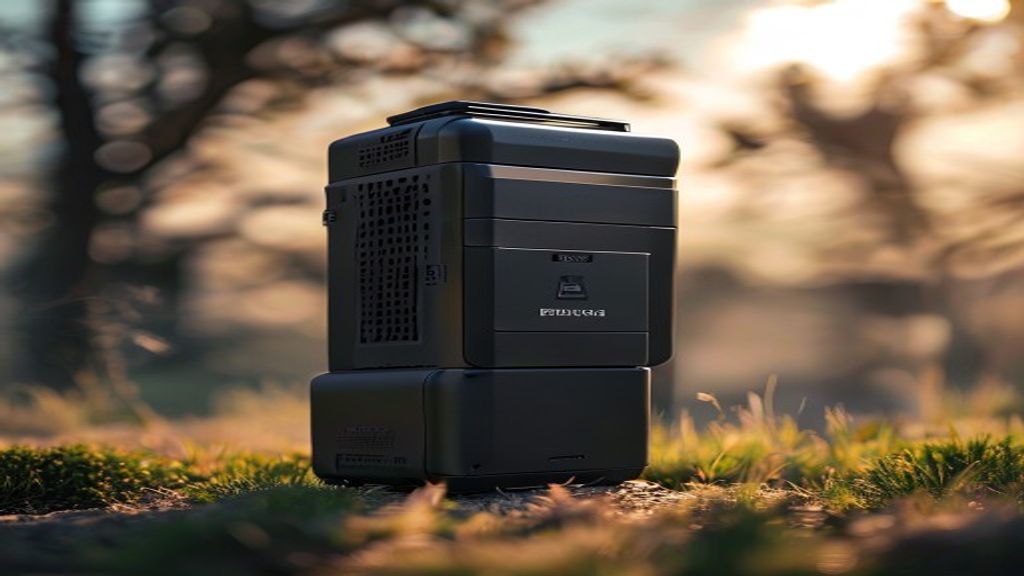
Portable power station reviews are supposed to tell you whether a box that costs $500-$3,700 will actually keep your fridge running or your camera batteries topped up. Most don’t, because most just repeat the spec sheet. This roundup does something different: it lines up what each manufacturer claims against what independent measurements and verified owner reviews actually show. The gap between those two things – not the marketing copy – is the real review.
- Independent sources referencedOutdoorGearLab, TechRadar, The Solar Lab
- Documented spec contradictions7
- Evidence confidenceMedium
- Last evidence check29 July 2026
The Jackery Explorer 2000 v2 is the strongest all-rounder in this database at its current $899 sale price, but almost every unit here has at least one manufacturer number that contradicts another manufacturer number – or an independent measurement – somewhere on its own spec page. Evidence: manufacturer spec sheets, the independent bench tests that have actually been published, and verified owner reviews across the models in SolarGenLab’s product database.
How We Approach Portable Power Station Reviews (Aggregated Data, Not In-House Testing)
We don’t run a lab. We aggregate verified owner reviews, manufacturer specifications, and independent published bench data, then flag where they disagree. That’s it. When Bluetti’s own Elite 200 V2 page lists four different recharge times on the same page, we print all four rather than picking the flattering one. When a brand’s surge wattage figure has no independent confirmation anywhere, we say so instead of repeating it as fact.
A few ground rules run through every review below. Portable solar panels typically deliver something like 30-51% of their rated wattage once you account for angle, cloud cover, and panel temperature – so a “200W panel” is realistically putting out 60-100W most of the time, not 200W. Surge wattage claims are almost never hit in practice; where independent testers have actually measured a surge figure, we print it next to the claim. Features like EcoFlow’s X-Boost, Anker’s SurgePad, and Bluetti’s “Power Lifting” are voltage-reduction tricks that let a unit run resistive loads (heaters, kettles) below their rated voltage – they are not free extra watts, and we only cite measured numbers for EcoFlow and Anker units, because no independent bench data exists for Bluetti’s Power Lifting claims. Idle draw – how much power a unit burns doing nothing – decides whether it holds a charge for a month or dies in your garage in two weeks, and we quote it wherever it’s published. And rated capacity is not the same as usable capacity; we print both when both exist. Full methodology is on our review process page.

Best Overall: Jackery Explorer 2000 v2
The strongest owner sentiment of any mid-flagship unit here, at a genuinely discounted price, makes this the safest all-around pick. Evidence: Jackery’s own spec sheet plus aggregated owner review data.
At $899 against a $1,499 MSRP, the Explorer 2000 v2 delivers 2,200W continuous output with a claimed 4,400W surge and a 400W solar input ceiling. It recharges 0-100% in about 1.75 hours per Jackery’s own spec table. Owners consistently rate it above the other mid-flagship units tracked here. The Anker SOLIX C2000 Gen 2 is its closest rival on sentiment, but it costs more and carries a smaller battery.
The catch: that 4,400W surge number is manufacturer-claimed, with no independent bench confirmation in the sources we track. Port selection is also unremarkable for the price tier – three AC outlets, one 100W USB-C, one 30W USB-C, one 18W USB-A, one car port. Nothing wrong with that layout, but nothing that beats cheaper units either.
| Spec | Value |
|---|---|
| Continuous / Surge | 2200W / 4400W (claimed) |
| Cycle life | 4000 cycles to 70%+ retention |
| Recharge | 1.75 hr (Jackery spec table) |
| Solar input | 400W ceiling |
| Price | $899 sale (MSRP $1,499) |
| Spec | The brand claims | The evidence shows |
|---|---|---|
| Surge wattage | 4400W | Not independently confirmed – manufacturer figure only |
Best Budget: EcoFlow RIVER 3
At $199-209 street, this is the cheapest genuinely usable LiFePO4 station in the database. Evidence: EcoFlow’s spec sheet and verified owner reviews.
The RIVER 3 undercuts nearly everything else here while still hitting a manufacturer-claimed 0-100% recharge in 60 minutes at 320W input. It’s rated for 300W continuous, 600W surge, with an X-Boost ceiling also at 600W – so don’t expect X-Boost to meaningfully extend what it can run. Solar input tops out at 110W (11-30V window).
This is a single-day-trip unit, not a backup solution. No expansion capability exists, and at 300W continuous you’re limited to small electronics, lights, and maybe a mini-fridge in short bursts. Owners treat it as a camping and tent-power tool, not a home backup device, and the specs agree with that framing.
Best for Camping: Jackery Explorer 300 v2
At 288g and with a 4000-cycle LiFePO4 pack, it’s the lightest station in the database that still ships with a car port. Evidence: Jackery’s spec sheet and verified owner reviews.
The Explorer 300 v2 lists at $269 (street price $249.99 at Best Buy) and carries a rare combination for its weight class: a built-in 12V car socket alongside 4000-cycle LiFePO4 cells rated to 70%+ retention. Owners praise the portability heavily – it’s the reference point for “lightest LFP station with a car port” in this database.
Jackery’s own materials disagree with each other on charge time. The FAQ page says roughly 76 minutes to full, while marketing copy elsewhere claims 80% in one hour. Those two statements are hard to reconcile precisely, and Jackery doesn’t publish a “best for” wattage guidance figure for this model, so buyers are left to guess what devices it’s actually sized for beyond the 300W continuous / 600W surge numbers.
Best for Home Backup: EcoFlow DELTA Pro 3
4000W continuous with 120/240V split-phase output and a scalable architecture up to 36-48 kWh makes this the strongest whole-home candidate here. Evidence: EcoFlow’s spec sheet, plus OutdoorGearLab’s published bench testing of the DELTA Pro 3.
At $2,599 on sale (MSRP $3,699), the DELTA Pro 3 is built for real household circuits, not just camp lighting. It handles 4000W continuous with 120/240V split-phase output, accepts up to 2,600W of solar (1,600W high-PV input plus 1,000W low-PV input), and its architecture scales to 12 kWh per unit with a system ceiling of 36-48 kWh when stacked. That’s genuinely rare in this database – only the Jackery 5000 Plus and Anker’s F3800 Plus come close for scale.
Two things to flag before buying. It has no car socket at all – a real gap if you were hoping to charge from a vehicle in a pinch. And the claimed 8,000W surge figure is manufacturer-stated only; no independent test in our sources confirms it holds up under real load. OutdoorGearLab measured 3,790 Wh of usable capacity against EcoFlow’s 4,096 Wh rating – over 93%, the best efficiency figure of any unit here. The surge claim, by contrast, remains unverified.
| Spec | Value |
|---|---|
| Continuous / Surge | 4000W / 8000W (claimed, unverified) |
| Solar input | 2600W ceiling (1600W + 1000W) |
| Cycle life | 4000 cycles to 80% |
| Recharge | 0-80% in 50 min at 1800W (120V) / 3600W (240V) |
| Expansion | 12 kWh/unit; 36-48 kWh system |
| Price | $2,599 sale (MSRP $3,699) |
Best Value: Anker SOLIX C1000 Gen 2
$550 for 2000W continuous and the fastest recharge in its class makes this the strongest dollar-per-watt pick outside the rock-bottom budget tier. Evidence: Anker’s spec sheet and verified owner reviews.
The C1000 Gen 2 lists at $550 with no current price cut – it doesn’t need one. It delivers 2,000W continuous (3,000W peak) and recharges 0-100% in just 49 minutes via its 1,600W UltraFast input, the quickest full recharge of any unit named in this roundup at this price. Solar input accepts 11-60V up to 600W.
The trade-off is real: expansion was explicitly removed from this generation for the sake of portability. The older, first-generation SOLIX C1000 could add extra batteries to grow past its base 1,800Wh capacity; this Gen 2 model cannot. If you want a fast, capable single unit and don’t care about future expansion, this is close to ideal. If expansion matters to you, the original C1000 or the EcoFlow DELTA 3 line are better matches.
Best Expandable System: Bluetti Apex 300
Scales further than anything else in this database – up to 58 kWh and 11.52 kW across 2-3 units and 18 batteries. Evidence: Bluetti’s own spec sheet. No independent bench test of this model has been published.
At $1,529 on sale (list $1,699) for the base unit, the Apex 300 is built to grow. It delivers 3,840W continuous with dual 120V and 240V output simultaneously, plus a 7,680W “Lifting Power” figure Bluetti calls out separately from continuous output. Add battery packs and the ceiling climbs to a genuinely enormous 58 kWh / 11.52 kW across 2-3 units and 18 batteries – nothing else in this database comes close.
The gaps are specific and worth knowing before you buy. Full solar input up to 4,000W requires a separately-sold SolarX 4K accessory – the native input ceiling without it isn’t published. DC output requires an additional $299 Hub D1 accessory. And Bluetti has not published a recharge-time figure for this unit anywhere in its spec materials, which makes it the least independently verified model in this entire roundup despite its ambition.
| Spec | Value |
|---|---|
| Continuous / Lifting Power | 3840W / 7680W |
| Cycle life | Up to 6000 cycles to 80% retention |
| Max system size | 58 kWh / 11.52 kW (2-3 units, 18 batteries) |
| Solar input | Up to 4000W – requires separate SolarX 4K |
| DC output | Requires separate $299 Hub D1 |
| Price | $1,529 sale (list $1,699), base unit |
| Spec | The brand claims | The evidence shows |
|---|---|---|
| Recharge time | Not published | No figure available anywhere |
Best for Off-Grid Solar Input: Anker SOLIX F3800 Plus
3,200W of solar input via two 1,600W MPPT channels is the highest solar ceiling in this database. Evidence: Anker’s spec sheet and verified owner reviews.
Priced at $2,300 on sale (Prime Day low was $1,985, regular price $2,499), the F3800 Plus accepts up to 3,200W of solar across two separate 1,600W MPPT inputs with an 11-165V window – the widest and highest-capacity solar setup named in this roundup. It also scales to a genuinely massive 53.8 kWh across two linked units at 12kW combined output, with 6,000W continuous (120V/240V) from the base unit.
Two honest caveats. Anker does not publish a surge wattage figure for this model at all – it’s simply absent from the spec sheet, unusual for a flagship unit at this price. And street pricing still starts near $2,300 even after discounts, putting it well above most of the units in this roundup. For anyone running serious off-grid solar arrays, though, the input ceiling alone makes it the clear category leader.
Where Recharge-Time Claims Fall Apart
Recharge time is the number manufacturers most love to round favorably – and where their own materials most often contradict each other. The Jackery Explorer 1500 v2’s own page prints three different figures for the same recharge: 64 minutes, 53 minutes, and 48 minutes, depending on which section of the page you read. The Bluetti Elite 200 V2 does something similar but worse, listing four separate claims – 1.4 hours to full, 80% in 1.1 hours, 80% in 50 minutes, and 80% in 45 minutes – all on the same product. Independent measurement from The Solar Lab put its actual full recharge at just over an hour, which lands closer to the middle of Bluetti’s own range but doesn’t confirm any single one of the four claims specifically.
The Bluetti AC200L shows the same pattern from a different angle: the spec sheet claims 0-80% in about 45 minutes at 2,400W, but TechRadar’s independent test measured roughly an hour to reach just 80% at a lower default input of around 1,200W – a reminder that manufacturer recharge claims often assume maximum input current that many users never actually configure. Jackery’s Explorer 1500 Ultra has a smaller version of the same problem: the spec table says 2 hours, marketing copy elsewhere on the same product says 1.5 hours.
The takeaway: treat any single recharge-time number as optimistic unless it’s corroborated elsewhere. When a brand publishes multiple contradicting figures, assume the slower one is closer to real-world behavior with typical charging setups.
Where Surge and Continuous Wattage Numbers Disagree
Surge wattage is the single most inflated spec category in this database. The Anker SOLIX C1000 (first generation, not the Gen 2) lists 2,400W surge on its main spec sheet – but Anker’s own comparison table elsewhere states 3,000W for the identical unit. That’s not a typo you can wave away; it’s the same company publishing two different numbers for the same product feature.
Remember that X-Boost (EcoFlow), SurgePad (Anker), and Power Lifting (Bluetti) are not free extra wattage – they’re voltage-reduction modes that let resistive loads like heaters and kettles run at a reduced voltage rather than tripping the unit’s overload protection. Independent measurements of X-Boost and SurgePad behavior exist for EcoFlow and Anker units specifically. No independent bench data has been published confirming Bluetti’s Power Lifting numbers under real load, so figures like the Apex 300’s claimed 7,680W Lifting Power or the Elite 400’s 3,900W figure should be read as manufacturer claims only, not verified performance.
Continuous wattage claims are generally more trustworthy than surge claims, since they’re easier to verify and manufacturers have less incentive to inflate them – but the EcoFlow DELTA Pro 3’s 8,000W surge figure and the Anker F3800’s 9,000W surge figure (sourced from a retailer rather than Anker directly) both remain unconfirmed by any independent test in our source list.
Expandability: Which Systems Actually Scale
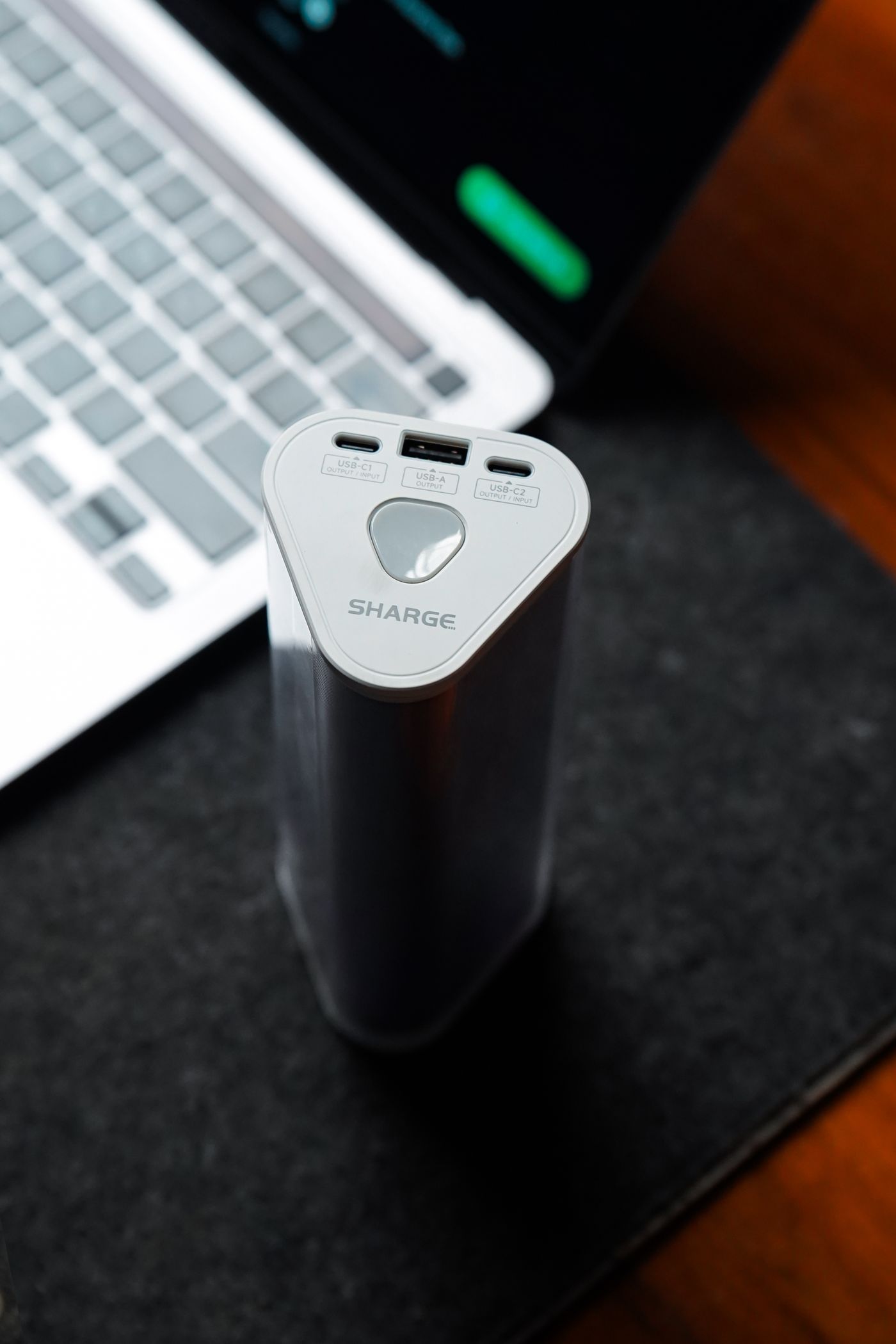
Expansion capability varies enormously across this database, and it’s often removed or added between generations without much fanfare. The Anker SOLIX C1000 Gen 2 is the clearest example: the original C1000 could expand to 2,112Wh with add-on batteries, but Anker explicitly removed that capability in the Gen 2 redesign to prioritize portability. If expansion matters, buy the original C1000, not the newer one.
At the top end, the Bluetti Apex 300 scales furthest of anything named here – up to 58 kWh and 11.52 kW across 2-3 units and 18 batteries – though full functionality requires separately-purchased accessories (the SolarX 4K for full solar input, the Hub D1 for DC output). The Anker SOLIX F3800 Plus scales to 53.8 kWh across two units at 12kW combined, making it the second-most expandable system here. EcoFlow’s DELTA Pro 3 tops out at 36-48 kWh across its system, and the Jackery Explorer 5000 Plus can reach 60 kWh with two units and ten battery packs.
At the smaller end, the EcoFlow DELTA 3 and DELTA 3 Plus both expand to 5 kWh, and the RIVER 3 Plus can grow to 858Wh with add-on batteries – useful if you’re starting small and want room to grow without replacing the whole unit. The Bluetti AC180’s expansion story is genuinely confusing: Bluetti’s marketing copy claims “up to 4224Wh” of expansion, but the FAQ (Q13) states expansion is not supported for charging in that direction – the correct reading, per Bluetti’s own FAQ, is that add-on batteries can only charge the AC180 via Power Bank Mode, not expand its usable capacity in the way the marketing implies.
Portable Power Station Reviews: Comparison Table
| Model | Award | Price | Continuous / Surge |
|---|---|---|---|
| Jackery Explorer 2000 v2 | Best Overall | $899 sale | 2200W / 4400W claimed |
| EcoFlow RIVER 3 | Best Budget | $199-209 street | 300W / 600W |
| Jackery Explorer 300 v2 | Best for Camping | $249.99-269 | 300W / 600W |
| EcoFlow DELTA Pro 3 | Best for Home Backup | $2,599 sale | 4000W / 8000W claimed |
| Anker SOLIX C1000 Gen 2 | Best Value | $550 | 2000W / 3000W |
| Bluetti Apex 300 | Best Expandable | $1,529 sale | 3840W / 7680W claimed |
| Anker SOLIX F3800 Plus | Best Off-Grid Solar | $2,300 sale | 6000W / surge unknown |
Which Portable Power Station Should You Buy?
For most people who want one station that handles camping, power outages, and general household backup without overthinking it, the Jackery Explorer 2000 v2 is the strongest pick in this database right now – the combination of a heavily-discounted price and the strongest owner sentiment in its tier is hard to argue with. If budget is the overriding concern and your needs are small – charging phones, running a light, maybe a fan – the EcoFlow RIVER 3 at $199-209 does the job without asking you to pay for capacity you won’t use.
Anyone planning whole-home backup with 240V circuits should be looking at the EcoFlow DELTA Pro 3 or, if solar input ceiling and long-term scale matter more than immediate cost, the Anker SOLIX F3800 Plus. The Bluetti Apex 300 deserves serious consideration if your ambitions are genuinely large-scale off-grid power, but go in knowing you’ll likely need the SolarX 4K and Hub D1 accessories to get full value, and that Bluetti hasn’t published independent praise or recharge data for it yet. If you want fast recharging and don’t care about future expansion, the Anker SOLIX C1000 Gen 2 is the best per-dollar pick outside the ultra-budget tier. And for lightweight camping where every gram counts but you still want a car port, the Jackery Explorer 300 v2 remains the reference point.
FAQ
What is the best portable power station in 2026?
Based on owner sentiment and the manufacturer specs in this database, the Jackery Explorer 2000 v2 is the strongest all-rounder at its current $899 price – it draws the most consistent owner praise of any mid-flagship unit tracked here. Best overall depends heavily on your use case, though: the EcoFlow DELTA Pro 3 and Anker SOLIX F3800 Plus are stronger picks for whole-home backup.
How long does it take to fully recharge a portable power station?
It varies wildly by model and input wattage, and manufacturer figures are frequently inconsistent even on their own product pages. The EcoFlow RIVER 3 claims 0-100% in 60 minutes at 320W input. The Anker SOLIX C1000 Gen 2 claims 49 minutes via 1,600W UltraFast charging. Larger units like the EcoFlow DELTA Pro 3 claim 0-80% in 50 minutes but only at high input wattages most home outlets can’t supply without additional hardware. Where independent measurements exist, as with the Bluetti Elite 200 V2, they sometimes land close to the manufacturer’s claim and sometimes don’t – check the specific model.
Is a bigger surge watt rating always better?
No. Surge ratings are the most commonly inflated spec in this category, and several manufacturers – Anker among them – have published contradicting surge figures for the identical product on different pages. A bigger surge number also doesn’t tell you anything about sustained continuous output, which matters more for most real appliances. Treat surge figures as marketing until independent confirmation exists.
Can you expand a portable power station with extra batteries later?
Some can, some can’t, and it changes between generations. The original Anker SOLIX C1000 could expand to 2,112Wh; the newer Gen 2 version removed that capability entirely. The Bluetti Apex 300 offers the largest expansion path in this database, scaling to 58 kWh across multiple units and batteries. Always check the specific model and generation before assuming expansion is possible.
What’s the difference between continuous watts and surge watts?
Continuous watts is what a station can sustain indefinitely under load. Surge watts is a brief spike rating meant to cover the startup draw of motors and compressors – and it’s rarely achieved in full according to independent measurements. Features like X-Boost, SurgePad, and Power Lifting let some resistive loads run below their rated voltage rather than genuinely adding extra power, and that distinction matters when you’re sizing a unit for specific appliances.
Do portable power stations really deliver their rated solar input?
The panels feeding them typically don’t deliver their rated wattage – documented real-world output for portable solar panels runs roughly 30-51% of the rated figure, depending on angle, temperature, and cloud cover. So a station rated for 400W of solar input paired with a “400W” panel will usually see well under that in practice. See our guide to portable solar panels for more on realistic output expectations.
How many charge cycles does a LiFePO4 power station actually last?
Most units in this database claim somewhere between 3,000 and 6,000+ cycles to 80% capacity retention, though the retention basis isn’t always stated clearly, and some spec sheets – like Bluetti’s AC180 and Elite 200 V2 – don’t publish the retention percentage at all. For more on how LiFePO4 chemistry compares to older NMC batteries, see our LiFePO4 vs. NMC explainer.
Which portable power station is best for home backup during an outage?
For whole-home 240V circuits, the EcoFlow DELTA Pro 3 and Anker SOLIX F3800 Plus are the strongest options in this database, both offering split-phase 120/240V output and serious expansion headroom. For smaller-scale outage coverage – keeping a fridge and some lights running for a few days – the Jackery Explorer 2000 v2 or Bluetti Elite 400 are reasonable middle-ground picks. See our guide on sizing a power station for home backup before buying anything in this category.
For a fresh, claimed-vs-measured breakdown of this year’s top picks, see our Best Solar Generator 2026 guide.
Related: Best Power Station for Van Life 2026 — the specs that matter for full-time van setups: idle draw, real solar input, measured recharge.