
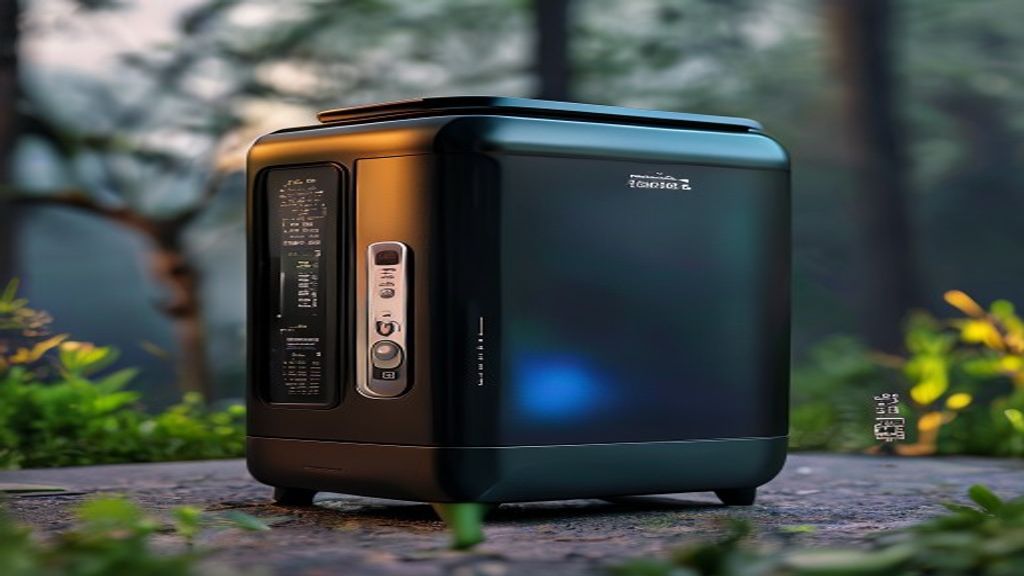
The Honesty Index tracks the one number most spec sheets bury: how much of a portable power station’s rated capacity — and a solar panel’s rated wattage — you actually get when someone measures it. Every figure below is attributed to the independent lab or reviewer that recorded it (OutdoorGearLab, The Solar Lab, TechRadar, Trusted Reviews, T3, Digital Trends) or to the manufacturer’s own spec. We do not run our own bench; our job is to line the claims up against the published measurements and show the gap.
Power stations: how much rated capacity you actually get
Rated watt-hours describe the cells inside the box. What reaches your devices is lower, after inverter and conversion losses. Across the units with published independent bench measurements, real usable capacity landed between 80% and 93% of the rating.
| Power station | Rated Wh | Measured usable Wh | % delivered | Source |
|---|---|---|---|---|
| EcoFlow DELTA Pro 3 | 4,096 | 3,790 | 93% | OutdoorGearLab |
| EcoFlow DELTA 3 Plus | 1,024 | 910 | 89% | The Solar Lab |
| Jackery Explorer 5000 Plus | 5,040 | 4,450 (120V) | 88% | The Solar Lab |
| Anker SOLIX C300 | 288 | 247 | 86% | The Solar Lab / Trusted Reviews |
| EcoFlow DELTA 3 Ultra Plus | 3,072 | 2,610 | 85% | The Solar Lab |
| Anker SOLIX C1000 | 1,056 | 897 | 85% | OutdoorGearLab |
| Jackery Explorer 2000 v2 | 2,042 | 1,710 | 84% | OutdoorGearLab |
| Goal Zero Yeti 700 | 677 | 560 | 83% | OutdoorGearLab |
| EcoFlow DELTA 3 Max Plus | 2,048 | 1,640 | 80% | T3 / StorageReview |
EcoFlow’s DELTA Pro 3 leads the field: OutdoorGearLab measured 3,790 Wh usable against its 4,096 Wh rating — over 93%, the tightest claim-to-reality gap here. At the other end, the EcoFlow DELTA 3 Max Plus returned 80% (T3 / StorageReview) — roughly 410 Wh you never get back.
Solar panels: the gap is far bigger
Portable solar is where the marketing and the multimeter diverge hardest. Measured in direct sun by OutdoorGearLab on a consistent bench, not one 100W-class panel delivered even 55% of its rating.
| Panel | Rated W | Measured W (direct sun) | % of rated | Source |
|---|---|---|---|---|
| Jackery SolarSaga 100W | 100 | 50.7 | 51% | OutdoorGearLab |
| Renogy 100W Foldable | 100 | 49.7 | 50% | OutdoorGearLab |
| Bluetti SP100L | 100 | 48.0 | 48% | OutdoorGearLab |
| Anker SOLIX PS100 | 100 | 38.7 | 39% | OutdoorGearLab |
| EcoFlow 110W | 110 | 38.3 | 35% | OutdoorGearLab |
| Goal Zero Nomad 100 | 100 | 30.3 | 30% | OutdoorGearLab |
Jackery’s SolarSaga 100W tops the group at 50.7 measured watts (51% of rated) — and it is the best of the bunch. Goal Zero’s Nomad 100 sits last at 30.3 W (30% of rated), despite a roughly $400 sticker. The practical takeaway for sizing: assume a 100W panel is really a ~40–50W panel in good sun, and buy accordingly.
Efficiency and idle-draw standouts
Two measured figures worth flagging. The Solar Lab recorded 94% round-trip efficiency on the Bluetti Elite 200 V2 — which they called “the highest we have ever seen in a portable power station” — alongside a 9.5W idle draw, the lowest they had measured on a unit that size. For grab-and-go units, The Solar Lab measured about 13.8W idle on the Anker SOLIX C1000 Gen 2 — the best idle figure in our database. Idle draw matters: a high-draw unit can quietly drain itself in a couple of days on a shelf.
What this means when you are buying
Two rules of thumb fall out of the data. For a power station, plan on roughly 80–90% of the rated watt-hours actually reaching your devices. For a portable solar panel, halve the rating for real-world sizing. And treat any surge number with suspicion: across these units, measured surge repeatedly fell short of the claim — for example, The Solar Lab measured the EcoFlow DELTA 3 Plus holding 2,600W against a 3,600W claim.
Methodology and caveats
Figures are drawn from independent published bench tests and manufacturer specifications, aggregated in our product database. Each power-station usable-Wh and solar measured-watts figure comes from the outlet named in its row; where two outlets disagree, we note it. This is not a first-hand lab test on our part — it is a synthesis of the best published measurements we could verify, and where no value is published we mark it UNKNOWN rather than estimate. Prices and specs change, and we add models as new independent data appears. Last updated July 2026.
Full evidence pages
Dig into the claimed-vs-measured detail for each model: EcoFlow DELTA Pro 3, Jackery Explorer 2000 v2, Bluetti Elite 200 V2, EcoFlow DELTA 3, Anker SOLIX C1000 Gen 2. Browse all in the product evidence library.