
A portable power station is only as good as the gap between what the spec sheet promises and what independent measurements or owners actually see. Based on aggregated owner reviews, published independent bench data, and the manufacturers’ own spec sheets, the Jackery Explorer 1000 v2 comes out on top for most buyers, but every model on this list has at least one claim worth double-checking before you pay for it.
Shopping for a portable power station in 2026 means reading two documents at once: the glossy spec sheet, and the fine print buried three tabs deep on the same brand’s own website. They frequently contradict each other. Jackery’s Explorer 1000 v2 is printed with a 400W solar rating on the physical unit while the marketing copy sells 600W. EcoFlow’s DELTA Pro 3 misses its own advertised AC recharge time by more than half an hour, per OutdoorGearLab‘s measurements. This roundup exists because those gaps matter more than any single spec.
We’re not running our own lab here – nobody at SolarGenLab claims to. What follows is built from aggregated verified owner reviews, manufacturer specifications, and independent published bench data from outlets like OutdoorGearLab, The Solar Lab, TechRadar, and Trusted Reviews. Full methodology is on our review process page.
How We Picked (Aggregated Specs, Not Our Own Lab)
Every model below comes from a database of manufacturer spec pages, retailer listings, and independent test results. We did not build or run a bench. Instead, we cross-checked each brand’s claimed wattage, recharge time, and cycle life against whatever OutdoorGearLab, The Solar Lab, TechRadar, or Trusted Reviews have actually published, plus what owners consistently report in reviews.
Where no independent test exists, we say so plainly. A portable power station’s rated capacity is a starting point, not a promise – and the products below show exactly how much daylight there can be between the two.
Best Overall: Jackery Explorer 1000 v2
Listed around $449 on sale at the time of writing (original MSRP was $799, with a $999 compare-at price also shown), the Explorer 1000 v2 packs 1,070 Wh at 1,500W continuous output, with a claimed 3,000W surge. That combination covers fridge and CPAP backup duty without tipping into flagship pricing.
The Solar Lab measured 87.5% efficiency at a 1,479W load and clocked real surge cutoff around 2,200W – well under Jackery’s 3,000W claim. AC recharge came in at 1 hour 35 minutes in standard mode, not the “1 hour” Jackery’s marketing headlines; hitting that number needs Emergency Charging Mode, which The Solar Lab warns can degrade the battery over time.
| Capacity | 1,070 Wh |
|---|---|
| AC Output | 1,500W continuous / 3,000W surge (claimed) |
| Weight | 23.8 lb |
| Cycle life | 4,000 cycles to 70%+ |
| Solar input | 400W printed on unit / 600W advertised |
| Spec | The brand claims | The evidence shows |
|---|---|---|
| Solar input | 600W (marketing) | Unit itself is printed with a 400W max – The Solar Lab calls this misleading |
| Surge output | 3,000W | The Solar Lab measured real surge cutoff around 2,200W |
| AC recharge time | “1 hour” (marketing copy) | 1.58 hours in Jackery’s own spec table; The Solar Lab measured 1h35m in standard mode |
Owners and The Solar Lab both point to the same strength: it stays quiet, sustains 1,560W for 10 minutes without drama, and earned an Android Police Editor’s Choice nod. The flip side is real – it’s not expandable, the connectors are dated MC3/DC8020 that lock out third-party panels without an adapter, and The Solar Lab reports it failed to start an older roughly 1,700W fridge.
Best Budget: EcoFlow RIVER 3
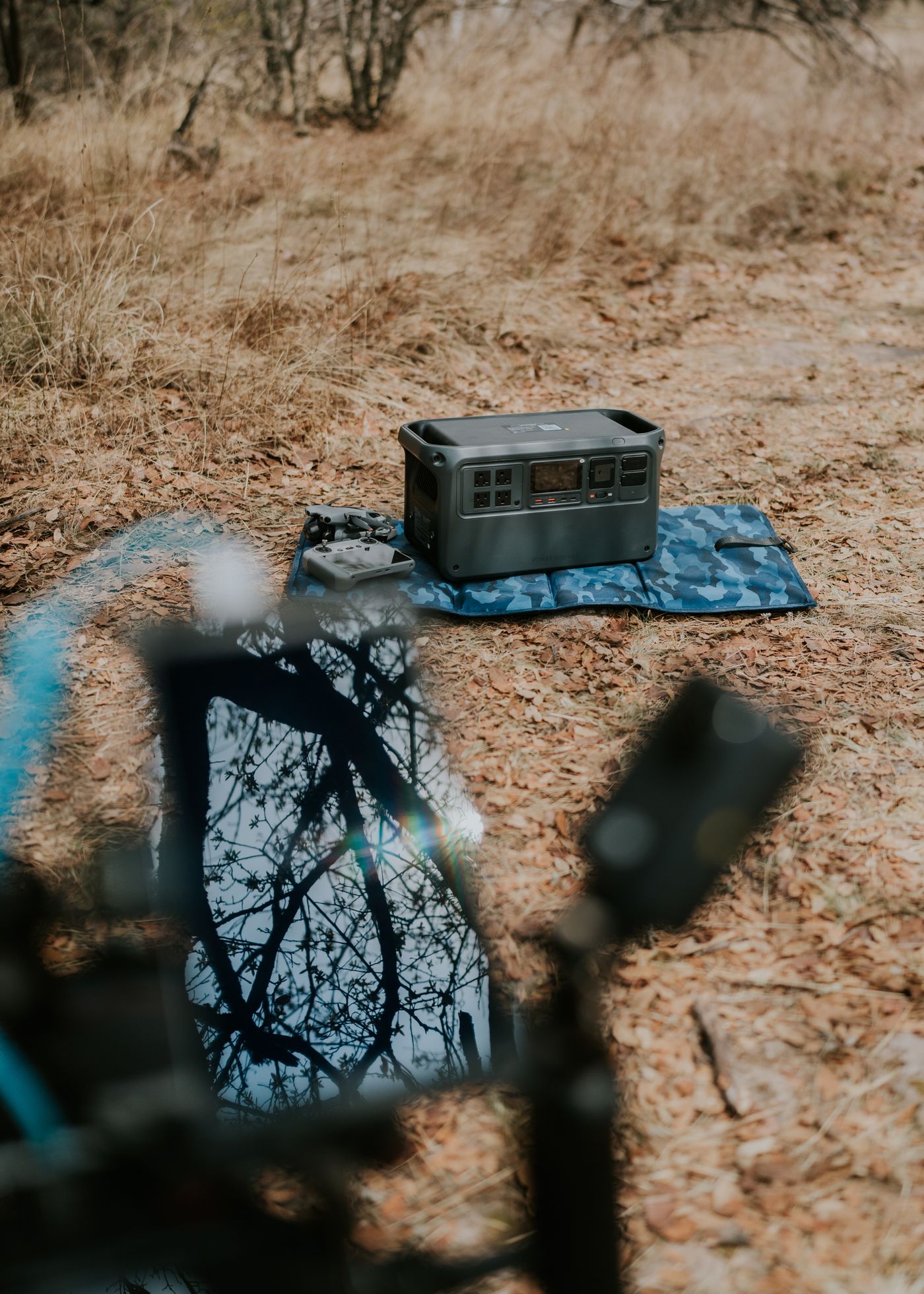
At a street price around $199-209 (MSRP $239), the RIVER 3 is a 245 Wh LiFePO4 unit weighing just 7.8 lb – genuinely built for ultralight day trips, not home backup. A full recharge takes 60 minutes at 320W input, and The Solar Lab measured that claim almost exactly: 58 minutes.
The catch is the surge rating. EcoFlow claims 600W surge with X-Boost extending to 600W, but The Solar Lab found the unit held only 350W for about 10 seconds before struggling – nowhere near enough for a full-size fridge. The Solar Lab also measured roughly 83% efficiency and called X-Boost “marketing fluff,” since it works by lowering voltage rather than delivering real extra power.
| Capacity | 245 Wh |
|---|---|
| AC Output | 300W continuous / 600W surge (claimed) |
| Weight | 7.8 lb |
| Cycle life | 3,000 cycles to 80% |
| Solar input | 110W (11-30V) |
| Spec | The brand claims | The evidence shows |
|---|---|---|
| Surge output | 600W (X-Boost) | The Solar Lab measured it held only 350W for about 10 seconds |
| AC recharge time | 60 minutes | The Solar Lab measured 58 minutes – the claim held |
This is a solid pick if you treat it as what it is: a lightweight day-trip battery, not a backup generator. EcoFlow prices it aggressively, and owner feedback around the unit sits lower than most of the rest of this list – the criticism about limited AC outlets and no built-in light is a fair trade for the weight.
Best for Camping: Jackery Explorer 600 v2
Listed around $429 on sale (list $500), the Explorer 600 v2 offers 640 Wh at 500W continuous / 1,000W surge, aimed squarely at weekend camping trips. It’s the lightest 600Wh-class LiFePO4 unit in this database at 14.11 lb, with a rated 1.66-hour AC recharge and a 200W max solar input.
Jackery rates it for 6,000+ cycles, but doesn’t publish a capacity retention percentage at that count – so long-term degradation is genuinely unverified, not just unadvertised. There’s also no app support at all, which Jackery’s own compare table confirms with a flat “N.”
| Capacity | 640 Wh |
|---|---|
| AC Output | 500W continuous / 1,000W surge |
| Weight | 14.11 lb |
| Cycle life | 6,000+ cycles (retention % not published) |
| Solar input | 200W |
| Spec | The brand claims | The evidence shows |
|---|---|---|
| Cycle life | 6,000+ cycles | Not published – no retention percentage stated at that count |
| AC recharge time | Five different figures appear on Jackery’s own page | 1.66 hours is the spec-table figure; no independent lab test exists to confirm |
Owners like the port selection and the cycle rating on paper. The criticism is structural: Best Buy product imagery claims dual 100W USB-C ports, but Jackery’s own spec table lists 100W plus a separate 30W port – a discrepancy worth checking before you buy for USB-C-dependent gear.
Best for Home Backup: EcoFlow DELTA Pro 3
At a sale price around $2,599 (MSRP $3,699), the DELTA Pro 3 is built for whole-home 240V backup: 4,000W continuous split-phase output, expandable to a 36-48 kWh system, with an 8,000W surge that EcoFlow claims but has not independently confirmed.
OutdoorGearLab measured 3,790 Wh usable out of the 4,096 Wh rating – over 93%, the highest measured efficiency anywhere in this roundup. OutdoorGearLab named it a Top Pick, ranking it #2 of 12 tested units, and reported it ran CPAPs and heaters overnight without the fan noise becoming a problem. The Solar Lab separately measured the unit holding a 5,100W surge for about a minute.
| Capacity | 4,096 Wh |
|---|---|
| AC Output | 4,000W continuous (split-phase) / 8,000W surge (claimed) |
| Weight | 113.5 lb (OutdoorGearLab measured 114.1 lb) |
| Cycle life | 4,000 cycles to 80% |
| Solar input | 2,600W (1,600W high-PV + 1,000W low-PV) |
| Spec | The brand claims | The evidence shows |
|---|---|---|
| Usable capacity | 4,096 Wh rated | OutdoorGearLab measured 3,790 Wh usable, over 93% – best in this roundup |
| AC recharge time | 2 hours 20 minutes (2,600W claimed input) | OutdoorGearLab measured 2 hours 54 minutes and never saw the rated 1,800W input at 120V |
| Surge output | 8,000W | The Solar Lab measured 5,100W held for about one minute |
The weight – 114 lb by OutdoorGearLab’s measurement – genuinely needs two people to move. There’s no car socket despite an extensive port array including L14-30, TT-30, and 6-20R connectors, and the display reportedly sits on “2 minutes remaining” for uncomfortably long stretches. Read more in our EcoFlow DELTA Pro 3 review.
Best Value: Anker SOLIX C1000 Gen 2
Priced at $550 with no artificial discount inflation, the SOLIX C1000 Gen 2 recharges 0-100% in a claimed 49 minutes at 1,600W – and independent measurement actually beat that claim, coming in around 47 minutes, faster than Anker SOLIX‘s own Guinness-record figure.
Idle draw is where this unit separates itself: measured at roughly 13.8W, described as “excellent” and the best idle figure recorded anywhere in this database. That’s the difference between a unit that holds charge on a shelf for weeks and one that quietly empties itself.
| Capacity | 1,024 Wh |
|---|---|
| AC Output | 2,000W continuous / 3,000W peak |
| Weight | 24.9 lb |
| Cycle life | 4,000 cycles to 80% |
| Solar input | 600W (MPPT 11-60V) |
| Spec | The brand claims | The evidence shows |
|---|---|---|
| Recharge time | 49 minutes (UltraFast, Guinness-record claim) | Measured around 47 minutes – beats Anker’s own claim |
| Idle draw | Not headlined by Anker | Measured around 13.8W – the best figure in this database |
| Expansion | None on this generation | Original C1000 expanded to 2,112 Wh; this generation removed it for portability |
Anker’s own language on UltraFast charging is worth repeating: use it “only when necessary to prolong battery lifespan.” That’s a rare instance of a manufacturer flagging its own headline feature’s downside in writing.
Best Solar Input / Expandable: Bluetti AC200L
The AC200L accepts a wide 12-145V / 15A solar input window, best suited around 1,200W, and is expandable via B300K batteries – useful for anyone planning to scale solar charging gradually rather than all at once.
TechRadar measured roughly a 1-hour AC recharge at around 1,200W in default mode, and independently reported the unit’s weight at around 28 kg – matching Bluetti’s own 62.4 lb spec closely enough to trust the figure. TechRadar praised the high output, huge port selection, and true UPS with pure sine wave output.
| Capacity | 2,048 Wh |
|---|---|
| AC Output | 2,400W continuous / 3,600W “Power Lifting” |
| Weight | 62.4 lb (TechRadar independently reports ~28 kg) |
| Solar input | 1,200W (12-145V, 15A) |
| Spec | The brand claims | The evidence shows |
|---|---|---|
| Max expansion | 8,192 Wh (legacy claim using discontinued B300) | With current B300K batteries, real ceiling is 7,577.6 Wh; Bluetti’s own meta description vaguely says “up to 7kWh” |
| AC recharge time | 0-80% in ~45 minutes at 2,400W | TechRadar measured about 1 hour at ~1,200W in default mode |
TechRadar’s blunt complaint: “Heavy!” – a two-person lift in practice. The proprietary AC and DC input sockets mean losing the cable forces a repurchase from Bluetti directly, and the unit isn’t compatible with Bluetti’s own A80 microinverter or D100S charger.
Best High-Capacity Flagship: Bluetti Apex 300
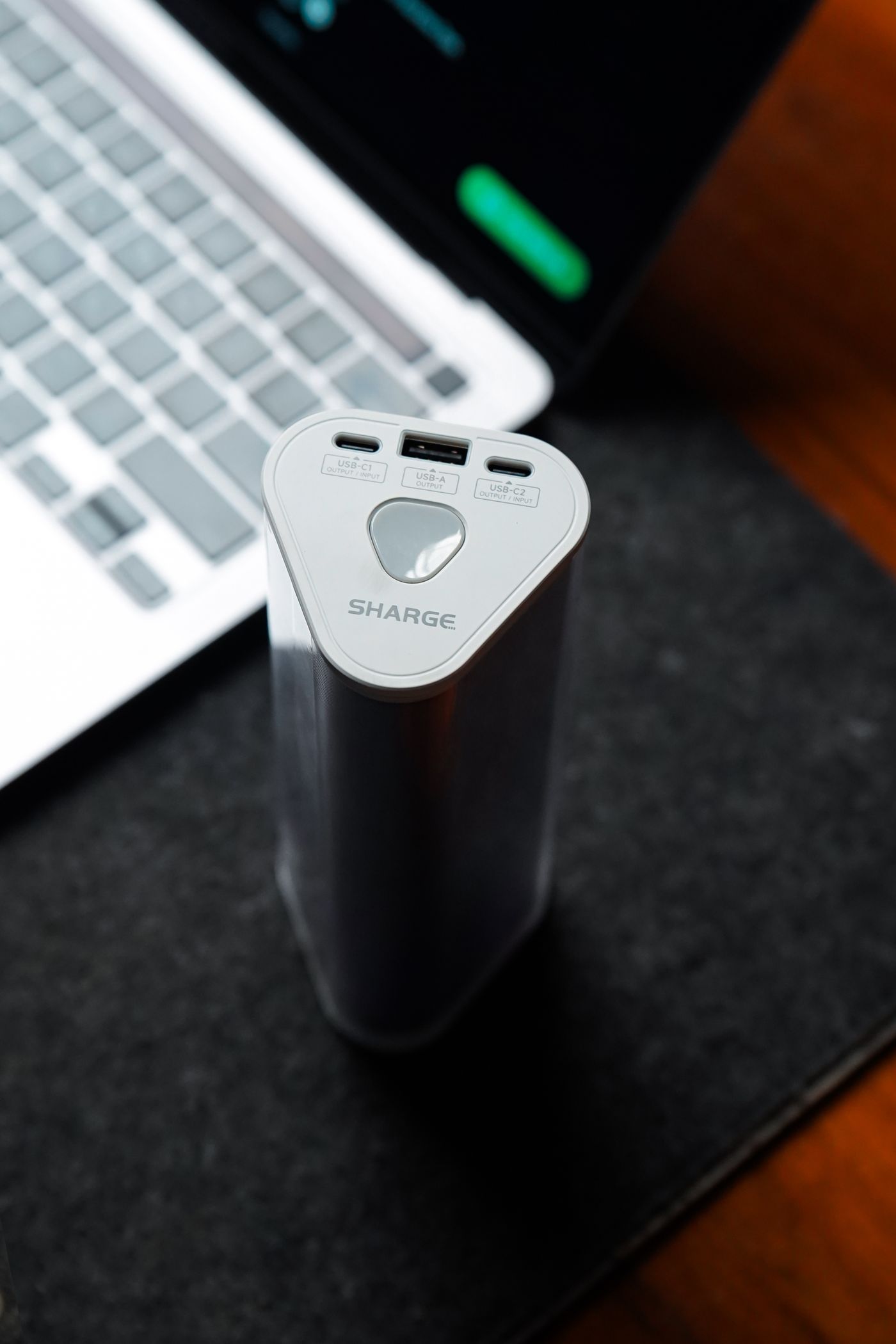
Listed around $1,529 on sale (list $1,699) for the base unit, the Apex 300 supports simultaneous 120V and 240V output at up to 3,840W continuous, with a 12kW bypass and a rated 7,680W Lifting Power figure. Bluetti claims up to 6,000 cycles with 80% capacity retention.
Where it separates from everything else here is expansion ceiling: a full system scales to 58 kWh / 11.52 kW across multiple units and up to 18 batteries – the largest published expansion path in this database.
| Capacity | 2,764.8 Wh base |
|---|---|
| AC Output | 3,840W continuous / 7,680W Lifting Power |
| Cycle life | Up to 6,000 cycles, 80% retention |
| Solar input | Up to 4,000W – only with separately-sold SolarX 4K accessory |
| Expansion | Up to 58 kWh / 11.52 kW system |
| Spec | The brand claims | The evidence shows |
|---|---|---|
| Solar input | 4,000W | Only achievable with the separately-sold SolarX 4K accessory; native PV input capacity is unpublished |
| DC output | Available | Requires an additional Hub D1 accessory costing $299 |
| ROI marketing | “Pays for itself in 2 years,” “save up to $2,400 annually” | Unverified marketing math with no published methodology |
No independent bench review of the Apex 300 has been published yet, so most of its headline figures – the 0 ms UPS switchover, the claimed 20W idle loss via a magnetic-core transformer – remain manufacturer claims rather than measurements. Treat them accordingly until an outlet publishes numbers.
Where Manufacturer Claims and Independent Numbers Disagree
The pattern across this whole category is consistent: continuous wattage claims tend to hold up reasonably well, while surge wattage, solar input, and recharge-time claims are where the gaps open up. EcoFlow’s DELTA 3 Plus claims a 3,600W surge; The Solar Lab measured only 2,600W. Anker’s SOLIX C300 is rated for 300W continuous, but Trusted Reviews found it cut out under that exact load and topped out around 255W sustained.
Idle draw is the spec brands rarely lead with, and it’s often the most consequential number in the sheet. Anker’s SOLIX F3800 draws a measured 50-70W at idle, meaning an idle unit can empty itself in roughly two days – a fact buried well below the headline 6,000W output figure. Compare that to the Anker SOLIX C1000 Gen 2’s measured ~13.8W idle draw, and the practical difference in real-world usability is enormous even though both units are marketed on their output numbers.
Solar input claims are another recurring gap. Jackery’s Explorer 1000 v2 is marketed at 600W solar but printed with a 400W rating on the unit itself. Bluetti’s Apex 300 claims 4,000W solar input but only with a $299-plus accessory attached. Treat every solar wattage claim on a portable power station as aspirational until you find an independent figure or a clear accessory requirement attached to it.
Portable Power Station Comparison Table
| Model | Capacity | Continuous Output | Price (at time of writing) |
|---|---|---|---|
| Jackery Explorer 1000 v2 | 1,070 Wh | 1,500W | ~$449 |
| EcoFlow RIVER 3 | 245 Wh | 300W | ~$199-209 |
| Jackery Explorer 600 v2 | 640 Wh | 500W | ~$429 |
| EcoFlow DELTA Pro 3 | 4,096 Wh | 4,000W | ~$2,599 |
| Anker SOLIX C1000 Gen 2 | 1,024 Wh | 2,000W | $550 |
| Bluetti AC200L | 2,048 Wh | 2,400W | ~$799 |
| Bluetti Apex 300 | 2,764.8 Wh base | 3,840W | ~$1,529 |
How to Match Wattage and Capacity to Your Use Case
Start with what you actually need to run, not the biggest number on the shelf. A portable power station in the 250-650 Wh range covers phones, laptops, and small camp lights for a weekend. Anything meant to run a fridge overnight needs at least 1,000 Wh of rated capacity – and remember rated capacity is not usable capacity, so lean toward the higher end of that range.
For whole-home backup, you’re looking at the 3,000-4,000 Wh-and-up flagship tier, ideally with expansion built in, since a single unit rarely covers a multi-day outage on its own. Our guide on how to size a portable power station walks through the math in more detail, and our power stations category page tracks new models as they launch.
If you’re pairing any of these with panels, remember that portable solar panels deliver roughly half their rated watts in real-world conditions – documented anywhere from 30% to 51% of the sticker figure. Budget your solar recharge expectations accordingly; see our best portable solar panels guide for panel-specific numbers.
FAQ
What size portable power station do I need for a full home backup?
Most whole-home setups start around 3,000-4,000 Wh and scale up through expansion batteries. The EcoFlow DELTA Pro 3 and Bluetti Apex 300 both target this tier, with the Apex 300 scaling furthest – up to 58 kWh across a multi-unit system. Match the number to your actual circuit needs rather than buying the biggest single unit available.
How long does it really take to recharge a portable power station?
Slower than the headline number in most cases. EcoFlow’s DELTA Pro 3 claims 2 hours 20 minutes at 120V; OutdoorGearLab measured 2 hours 54 minutes and never saw the rated input wattage. Jackery’s Explorer 1000 v2 markets “1 hour” but The Solar Lab measured 1 hour 35 minutes in standard charging mode. Always check for an independent measurement before trusting the marketing figure.
Do portable power stations lose capacity over time?
Yes, like any lithium battery, though the rate varies by chemistry and cycle count. LiFePO4 units in this roundup are typically rated for 3,000 to 6,000+ cycles to 80% retention, but several brands – including Jackery’s Explorer 600 v2 – publish the cycle count without stating the retention percentage that count is based on. Treat unstated retention figures as unverified.
Is a higher surge watt rating better for appliances like fridges?
Only if the surge rating is real. Manufacturer surge claims are routinely higher than what independent testers actually record – EcoFlow’s DELTA Pro 3 claims 8,000W surge, but The Solar Lab measured 5,100W held for about a minute. Voltage-reduction features like EcoFlow’s X-Boost and Anker’s SurgePad let an appliance start at reduced voltage rather than delivering genuine extra power, so don’t treat them as free headroom.
Can I expand a portable power station’s battery capacity later?
Some can, some can’t, and marketing sometimes contradicts the actual spec sheet. Bluetti’s AC180 advertises “up to 4224Wh” expansion while its own FAQ states expansion isn’t supported at all. Anker removed expansion entirely from the SOLIX C1000 Gen 2 despite the original C1000 supporting it. Always check the specific generation, not just the model family name.
What’s the difference between continuous watts and surge watts?
Continuous watts is what a unit can sustain for extended periods; surge watts is a brief peak, usually needed for motor start-up on fridges, pumps, or power tools. Surge figures are almost never met in independent testing, and several manufacturers’ own comparison tables contradict their spec sheets on this exact number – Anker’s SOLIX C1000 lists both 2,400W and 3,000W surge on its own pages.
Are portable power station solar input claims accurate in real use?
Frequently not, and portable solar panels only deliver roughly half their rated watts in real conditions to begin with – a documented range of 30% to 51%. Layer that onto a power station’s solar input ceiling, and the Jackery Explorer 1000 v2’s marketed 600W solar claim looks especially optimistic next to the 400W rating printed on the unit itself.