
- Independent sources referencedThe Solar Lab, OutdoorGearLab, TechRadar
- Documented spec contradictions7
- Evidence confidenceMedium
- Last evidence check29 July 2026
Neither brand’s spec sheet survives contact with independent measurement unscathed, but EcoFlow’s numbers hold up more consistently than Bluetti’s. Based on aggregated owner reviews, manufacturer specifications, and independent published bench data.
The Real Question: Which EcoFlow vs Bluetti Claims Actually Hold Up?
The ecoflow vs bluetti debate usually gets framed as a spec-for-spec fight: whose inverter is bigger, whose battery is denser, whose app has more features. That’s the wrong question. Both brands publish numbers that don’t survive contact with their own product pages, let alone independent measurement.
EcoFlow and Bluetti are the two biggest names in portable power stations, and both have been caught printing internally contradictory specs. Bluetti’s AC180 page states its own weight two different ways in two different places. Bluetti’s Elite 200 V2 page gives four different recharge times for the same charge cycle. EcoFlow isn’t immune either – its DELTA 3 Ultra Plus doesn’t publish a cycle life figure at all, and its own X-Boost feature gets called “marketing fluff” by independent reviewers who’ve measured what it actually does.
This comparison works through eight matched tiers, checks the recharge and expansion claims against what’s actually been published or measured, and ends with a straight answer on which brand to buy. For more on how we approach this, see our review process.

EcoFlow vs Bluetti at a Glance: Price, Capacity, Praise and Criticism
Before the tier-by-tier breakdown, here’s the shape of both lineups. Prices are listed around the figures below at the time of writing – both brands run frequent sales, so treat street prices as a snapshot, not a fixed number.
| Model | Price | Capacity | Continuous Output | Award |
|---|---|---|---|---|
| EcoFlow RIVER 3 Plus | ~$259 street | 286 Wh | 600W | Best Budget – EcoFlow |
| Bluetti Elite 30 V2 | ~$219 sale | 288 Wh | 600W | Best Budget – Bluetti |
| EcoFlow DELTA 3 | ~$499 street | 1024 Wh | 1800W | Best Value Mid-Tier |
| Bluetti AC180 | ~$449 sale | 1152 Wh | 1800W | Best for Van Life |
| EcoFlow DELTA Pro 3 | ~$2599 sale | 4096 Wh | 4000W split-phase | Best for Whole-Home Backup |
| Bluetti Elite 200 V2 | ~$799 sale | 2073.6 Wh | 2600W | Best 2kWh Sweet Spot – Bluetti |
| EcoFlow DELTA 3 Ultra Plus | ~$1499 sale | 3072 Wh | 3600W | Best Flagship Solar Input – EcoFlow |
| Bluetti Apex 300 | ~$1529 sale | 2764.8 Wh base | 3840W | Best Flagship Expansion – Bluetti |
Recharge Speed: Marketing Claims vs What Owners and Reviewers Actually Measured
Recharge speed is where both brands make their loudest claims and where the gaps show up fastest. EcoFlow’s DELTA 3 Plus claims 0-100% in 56 minutes. The Solar Lab measured 55 minutes – a claim that essentially held.
Bluetti’s Elite 200 V2 is the messier case. Its own product page states four different recharge figures: 1.4 hours to full, 80% in 1.1 hours, 80% in 50 minutes, and 80% in 45 minutes – all for the same unit. The Solar Lab measured just over an hour for a full recharge, which lands in the neighborhood of the slowest of Bluetti’s own claims, not the fastest.
The DELTA Pro 3 shows the same pattern in reverse. EcoFlow claims 0-80% in 50 minutes on 1800W input. OutdoorGearLab measured 2 hours 54 minutes for a full recharge and never saw the rated 1800W input arrive at all – the real ceiling topped out around 1600W. That’s a meaningful miss on a flagship unit.
Expansion Batteries: Who Really Lets You Scale Up
This is where Bluetti’s marketing runs into its own FAQ. The AC180’s product page advertises “Capacity Grows As Needed… up to 4224Wh.” Bluetti’s own FAQ, item Q13, states plainly that the AC180 does not support capacity expansion at all – B80, B230 and B300 packs can only charge it via Power Bank Mode, not expand it. The FAQ is the accurate one. The marketing copy is not.
EcoFlow’s expansion story is more consistent across its lineup. The RIVER 3 Plus expands to 858 Wh with EB300/EB600 packs. The DELTA 3 scales to 5 kWh. The DELTA Pro 3 goes further still – 12 kWh per unit, with a full system reaching 36-48 kWh.
Bluetti’s Apex 300 is the counter-argument: it has the largest expansion ceiling in either brand’s lineup, up to 58 kWh and 11.52 kW combining multiple units and battery packs. But that number comes with an asterisk the marketing doesn’t lead with, covered below.
Budget Tier Face-Off: EcoFlow RIVER 3 Plus vs Bluetti Elite 30 V2
The RIVER 3 Plus recharges 0-100% in 60 minutes at 380W and expands to 858 Wh with add-on packs. It’s the only EcoFlow at this price with a proper light bar, and owners praise it for working close to spec across AC, solar and output. Criticism centers on its 600W continuous ceiling and just 3 AC outlets, only one of which is UPS-rated.
Bluetti’s Elite 30 V2 answers with a 70-minute full recharge, or 80% in 45 minutes using TurboBoost, plus a 140W USB-C PD 3.1 port that’s rare at this price point. TechRadar’s Jack Laurent called it their favorite budget power station and used the word “spectacular.” The trade-off: no expansion battery support at all, and a 980W bypass that limits its usefulness as a UPS for larger devices.
Mid-Tier Face-Off: EcoFlow DELTA 3 vs Bluetti AC180
The DELTA 3 recharges 0-100% in 56 minutes, expands to 5 kWh, and carries strong owner praise at a street price listed around $499. Its weak point is solar: a single XT60 input rated 11-60V limits how much sun you can throw at it compared to rivals with dual inputs.
Bluetti’s AC180 counters with 1800W continuous output and a 500W solar input window (12-60V, 10A) built for van and camping setups. Owner praise is strong. But this is the model where Bluetti’s own page contradicts itself hardest: the spec table lists 35.27 lb while the marketing copy on the same page says 37 lb. Worse, the same page markets “up to 4224Wh” expansion while Bluetti’s own FAQ confirms expansion is not supported. Read the FAQ, not the hero copy, on this one – and see our full Bluetti AC180 review for the rest.
Home Backup Tier: EcoFlow DELTA Pro 3 vs Bluetti Elite 200 V2
EcoFlow’s DELTA Pro 3 delivers 4000W continuous at 120/240V split-phase, a 2600W solar input ceiling, and expansion to a 36-48 kWh system. OutdoorGearLab measured 3790 Wh usable of its 4096 Wh rating – over 93%, the highest efficiency figure anywhere in this comparison. It’s an OGL Top Pick, ranked #2 of 12 units tested. The recharge claim doesn’t hold as cleanly: OGL clocked 2 hours 54 minutes against EcoFlow’s 50-minute-to-80% claim, and never saw the rated 1800W input arrive.
Bluetti’s Elite 200 V2 sits in the 2 kWh class rather than 4 kWh, but it’s worth comparing on efficiency terms. The Solar Lab measured 94% round-trip efficiency on this unit – the highest figure they’ve ever recorded on a portable power station – plus 9.5W idle draw, which they call the lowest they’ve seen at this size. That idle number matters: a low idle draw is the difference between a unit that holds charge for weeks in storage and one that drains itself. The Elite 200 V2 also uses a non-proprietary XT60 solar input up to 1000W (12-60V, 20A), which is friendlier to third-party panels than Bluetti’s proprietary connectors elsewhere in the line.
The catch: The Solar Lab notes they had to buy this unit anonymously after Bluetti blacklisted them over a critical AC500 review – worth knowing when you weigh how independent that data really is, even though the numbers themselves check out against the reviewer’s own methodology.
Flagship Tier: EcoFlow DELTA 3 Ultra Plus vs Bluetti Apex 300
EcoFlow’s DELTA 3 Ultra Plus offers 1600W-class solar input (2x 800W ports) and expansion to 11 kWh. The Solar Lab measured 2610 Wh usable of its 3072 Wh rating – 85%, the best efficiency figure in the entire DELTA 3 family – along with a measured idle draw around 24W. But EcoFlow doesn’t publish a cycle life figure for this model at all, and the 0-80% recharge takes 89 minutes even at 1800W input, slower than smaller EcoFlow units. The Solar Lab also flags a genuinely dangerous quirk: on overload, the 30A port shuts down first, even when the overload is on the 120V outlets – a problem if this unit is tied into a home transfer switch.
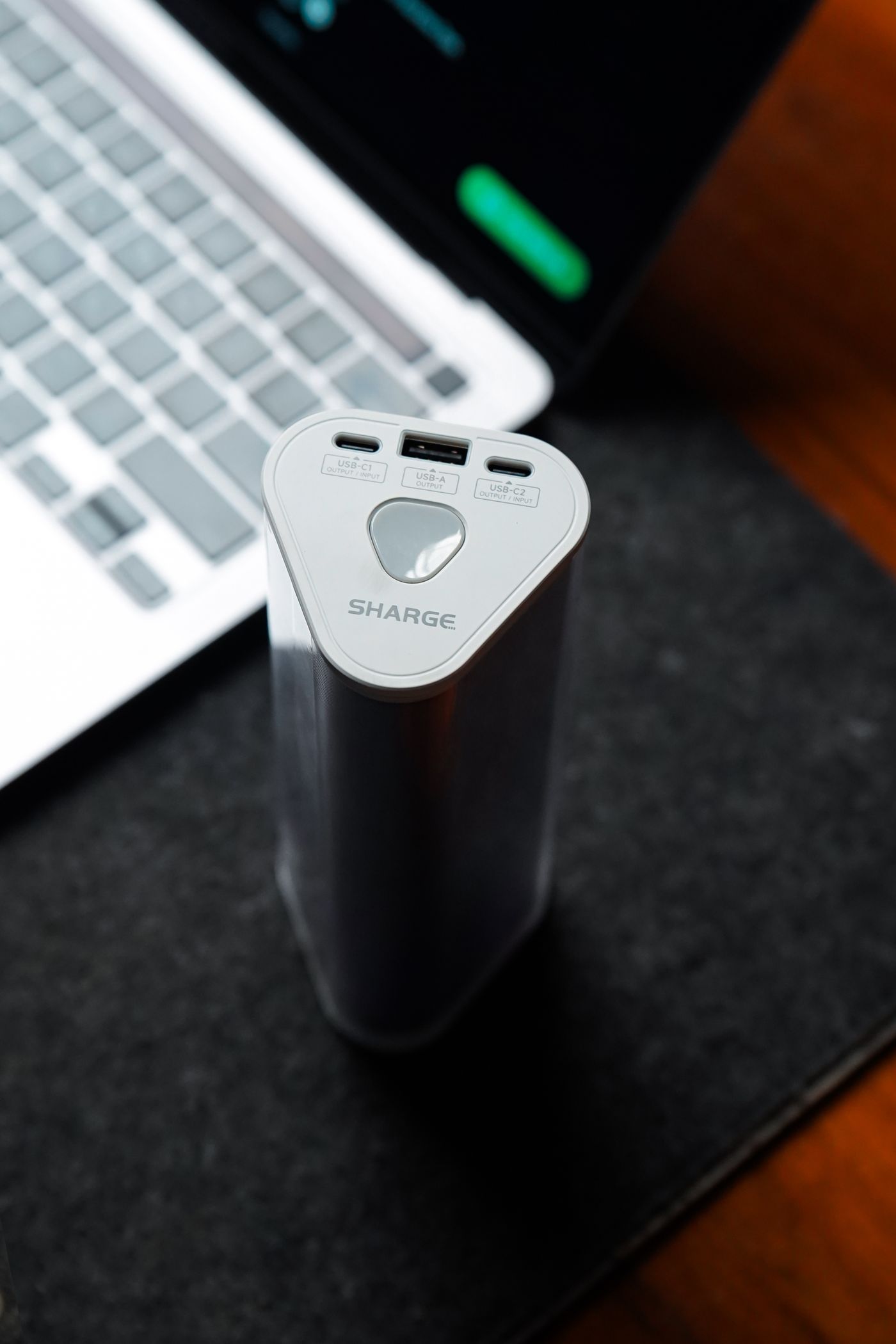
Bluetti’s Apex 300 counters with the largest expansion ceiling in Bluetti’s lineup – up to 58 kWh and 11.52 kW combining units and battery packs – plus simultaneous 120V and 240V output, a real differentiator most rivals can’t match. But the headline capabilities are gated behind paid accessories. Full 4000W solar input requires the separately-sold SolarX 4K accessory. DC output requires the Hub D1 accessory, listed around $299. Home circuit control needs the AT1 panel, and parallel operation needs the Hub A1. The $1,529 sticker price is not the real system price once you need any of these.
Where Bluetti’s Own Spec Pages Contradict Each Other
This is the section that should worry Bluetti shoppers most. The AC180 states two different weights on the same page. The Elite 200 V2 gives four different recharge times for the same full-charge cycle, and doesn’t state the basis for its own cycle-retention percentage. The AC180’s marketing promises expansion that its own FAQ directly denies.
| Spec | Bluetti claims | What the evidence shows |
|---|---|---|
| AC180 weight | 35.27 lb (spec table) | 37 lb (marketing copy, same page) |
| AC180 expansion | “Up to 4224Wh” (marketing) | FAQ Q13: expansion NOT supported |
| Elite 200 V2 full recharge | 1.4 hr / 80% in 1.1 hr / 80% in 50 min / 80% in 45 min (four claims, one page) | The Solar Lab measured just over 1 hour full |
| Elite 200 V2 Power Lifting surge | 3900W | The Solar Lab sustained 3000W for over 2 minutes – 900W short of claim |
| Elite 200 V2 solar input | 1000W claimed | The Solar Lab measured ~800W real max |
None of this means Bluetti’s hardware is bad – the Elite 200 V2’s measured efficiency and idle draw are genuinely excellent numbers. But the spec pages themselves cannot be trusted at face value, and that’s a pattern across multiple Bluetti models, not a one-off typo.
Where EcoFlow’s Numbers Are Cleaner (and Where They Aren’t)
One documented exception on the EcoFlow side: The Solar Lab flagged erratic thermal behaviour on the DELTA 3 Plus, reporting that under a 1,573W load the internals reached about 138°F while the fans failed to spin up — which it called a glaring design flaw. T3, testing separately, reported the opposite symptom: fans running constantly at idle with nothing plugged in. Two outlets, two failure modes, the same uncorrected defect.
EcoFlow’s recharge claims tend to survive independent measurement better than Bluetti’s. The RIVER 3 Plus, DELTA 3 Plus and DELTA 3 Max Plus all landed close to their stated AC recharge windows in Solar Lab and T3 testing. That consistency is real and it’s a point in EcoFlow’s favor.
But EcoFlow has its own soft spots. X-Boost is the big one: it’s a voltage-reduction feature, not free extra power, and The Solar Lab called the RIVER 3 Plus’s X-Boost figure “not a real number” – 1200W drawn from a 286 Wh pack lasts about 4 minutes and can damage sensitive electronics like laptops. Surge claims across the DELTA 3 Plus and DELTA 3 Ultra Plus also fall short: the DELTA 3 Plus was measured at 2600W surge against a 3600W claim. EcoFlow also skips cycle life data on some of its own flagship models – neither the DELTA 3 Max Plus nor the DELTA 3 Ultra Plus publish a cycle count, which is a strange omission on units costing well over a thousand dollars.
Which Brand Should You Actually Buy
If recharge-claim accuracy and expansion clarity matter most, lean EcoFlow. Its numbers, tier for tier, tend to land closer to what independent reviewers actually measure, and its expansion story doesn’t contradict its own FAQ.
If raw efficiency and low idle draw matter most, Bluetti’s Elite 200 V2 is hard to beat on the numbers The Solar Lab recorded – a genuinely excellent result buried inside a spec page that otherwise can’t keep its own recharge claims straight. Bluetti’s Apex 300 also wins outright on expansion ceiling, if you’re prepared to pay for the accessories that unlock it.
Neither brand deserves blind trust in its own marketing copy. Read the spec-versus-measurement gap for the exact model you’re considering before you buy, not just the headline number on the box. For a wider view across brands, see our best portable power stations roundup and our best solar panels for power stations guide if you’re pairing either brand with panels.
FAQ
Is EcoFlow or Bluetti more reliable?
Neither brand has a clean sheet. EcoFlow’s recharge claims tend to hold up closer to independent measurement across models like the DELTA 3 Plus and RIVER 3 Plus. Bluetti’s spec pages contain more internal contradictions – the AC180’s weight and expansion claims, the Elite 200 V2’s four different recharge times – but its hardware, where independently measured, has produced some of the best efficiency and idle-draw figures recorded in this comparison. Reliability depends more on the specific model than the brand name.
Which is better for home backup, EcoFlow or Bluetti?
EcoFlow’s DELTA Pro 3 offers 4000W continuous split-phase output and expansion to 36-48 kWh, with OutdoorGearLab measuring over 93% usable capacity – the strongest efficiency figure in this entire comparison. Bluetti’s Apex 300 has a larger theoretical expansion ceiling and true simultaneous 120V/240V output, but its biggest capabilities require paid accessories not included in the base price. For most homes, the DELTA Pro 3’s cleaner all-in-one pricing makes it the simpler choice.
Do EcoFlow and Bluetti batteries expand the same way?
No. EcoFlow’s expansion path is consistent across its lineup, from the RIVER 3 Plus up to the DELTA Pro 3. Bluetti’s is inconsistent: the AC180 markets expansion its own FAQ denies, the Elite 200 V2 and Elite 300 don’t publish an expansion spec at all, and only the Apex 300 offers a genuinely large, documented expansion ceiling – gated behind extra accessories.
Which brand recharges faster, EcoFlow or Bluetti?
On paper, both brands claim similarly fast recharge windows in the 45-90 minute range depending on tier. In measured testing, EcoFlow’s claims have landed closer to reality more consistently – the DELTA 3 Plus measured 55 minutes against a 56-minute claim. Bluetti’s Elite 200 V2 measured just over an hour, which sits closer to the slowest of the four conflicting times Bluetti itself publishes.
Is Bluetti cheaper than EcoFlow for the same capacity?
It depends on the tier. Bluetti’s Elite 200 V2 at roughly $799 for 2073.6 Wh undercuts EcoFlow’s DELTA 3 Ultra Plus at roughly $1499 for 3072 Wh on a per-Wh basis, though the two aren’t a direct capacity match. At the budget tier, Bluetti’s Elite 30 V2 (~$219) and EcoFlow’s RIVER 3 Plus (~$259) are close enough that the choice should come down to features, not price.
Can EcoFlow and Bluetti solar panels be used interchangeably?
Generally, no. Both brands use their own connector standards and voltage windows, and neither publishes cross-compatibility as a supported feature in this database. Bluetti’s Elite 200 V2 is a notable exception, using a non-proprietary XT60 input that’s friendlier to third-party panels. Check the solar input voltage window and connector type for your specific model before assuming a panel from one brand will work on the other.